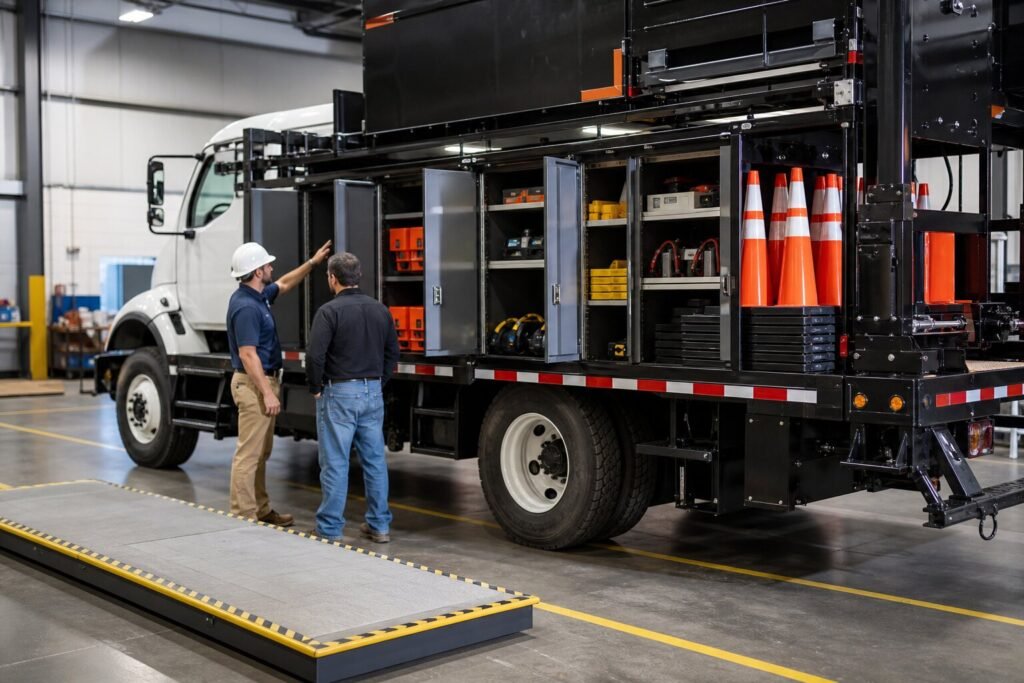
Traffic control truck storage should be planned around payload, axle distribution, securement, crew access, visibility, and the order equipment is deployed—not just maximum compartment volume.
Cones, signs, stands, batteries, tools, and boards add weight quickly. Poor placement can slow setup, create lifting hazards, obstruct sightlines, or push the completed build outside intended ratings.
Planning Storage and Payload on a Traffic Control Truck: an expert checklist
- Create a realistic equipment and weight inventory
- Confirm chassis, axle, tire, and body ratings
- Place frequently used gear within safer reach
- Separate loose tools from deployment areas
- Plan securement, drainage, charging, and inspection access
The final configuration should be evaluated as a complete vehicle. Upfit components, occupants, fuel, optional equipment, and carried inventory all contribute to actual operating weight.
How to make the next decision
Start with documented conditions rather than assumptions. Western Highways Traffic Safety provides information and services relevant to traffic control truck storage payload planning; the correct scope still depends on the property, equipment, documents, or project conditions involved.
Review the related guidance on traffic control truck build checklist and custom truck beds. These pages explain the available service context before you request a site-specific recommendation.
Questions to ask a provider
- What information do you need before recommending a scope?
- Which assumptions still need field verification?
- What is included, excluded, and documented?
- What conditions would change the recommendation?
Clear answers help customers compare scope and process instead of choosing from a headline alone. Keep records, photos, plans, model numbers, or ownership documents that are relevant to the service.
Frequently asked questions
Why does axle distribution matter?
A truck may remain under total GVWR while overloading an individual axle, tire, or component rating.
Should cones be stored by maximum capacity?
Capacity matters, but normal route needs, securement, center of gravity, and safe deployment should guide the practical load.
How can storage reduce setup time?
Organize equipment in deployment order, label compartments, and keep inspection points accessible.
Can a truck body be modified later?
Often, but changes should be reviewed for structure, wiring, weight, compatibility, and certification implications.
Request a business-specific review
Use the Western Highways Traffic Safety contact or scheduling page to describe your situation and confirm the appropriate next step.