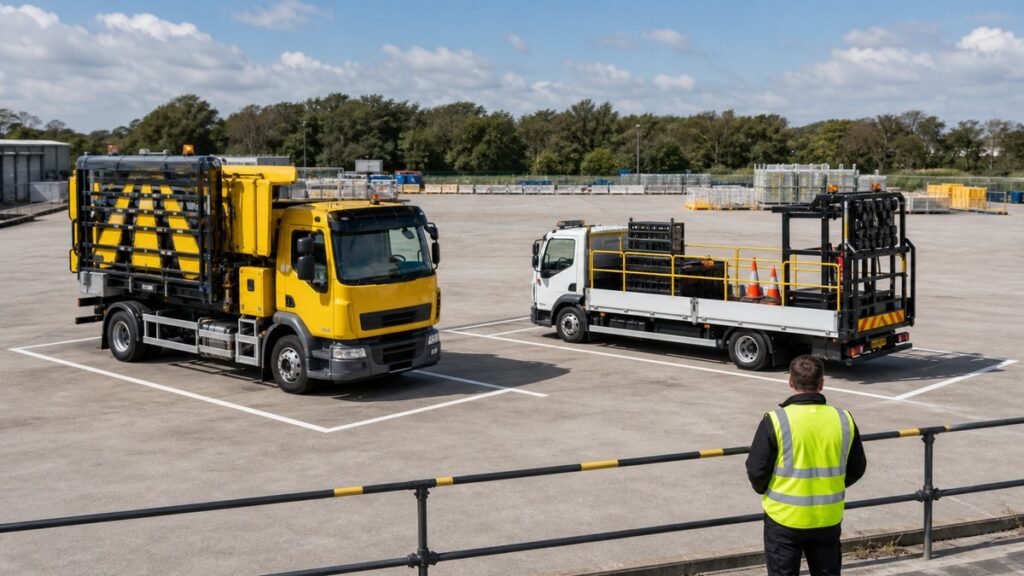
The choice between a dedicated TMA truck and a multipurpose support truck is primarily an operating-model decision, not a universal safety ranking. A dedicated unit may simplify configuration control and availability, while a multipurpose build may consolidate selected fleet functions. Either approach needs a compatible chassis and equipment package, manufacturer conditions, documented loading, technical review, maintenance capacity, and project acceptance.
Compare mission stability before comparing hardware
List the recurring work categories the fleet actually supports and identify how often the required configuration changes. A dedicated unit is easier to keep in one controlled state when its mission is stable, but it can become an idle asset if demand is irregular. A multipurpose truck can support different assignments only when its interfaces, load cases, storage, controls, and changeover process have been deliberately reviewed. Avoid assuming versatility from an equipment list. If attachments or carried materials change, each allowed configuration needs a documented basis and a way for dispatch and maintenance to identify it. Separate project requirements from general fleet preferences. The approved traffic-control plan and the project roles named in the plan determine the required application; the truck selection process supplies an asset that may meet those requirements after review. Neither model lets the fleet substitute a convenient vehicle for a specified setup without the appropriate decision.
Examine availability and dispatch friction
A dedicated truck can reduce conflicts because its calendar is tied to one function, its documentation is easier to locate, and crews know which asset to request. The trade-off is that maintenance or repair can remove the entire dedicated capacity unless the fleet has a documented backup plan. A multipurpose truck may increase scheduling flexibility on paper, yet two departments may need its different capabilities at the same time. Changeover, inspection, loading, and documentation also consume planned time. Model realistic dispatch events: overlapping projects, an unresolved defect, an attachment awaiting review, a late scope change, and a unit that returns in a different configuration. Ask who has authority to prioritize demand and how the system prevents a truck from being assigned under the wrong status. Availability should be measured as verified readiness for the intended configuration, not simply a vehicle present in the yard.
Compare configuration and payload control
Dedicated configurations can make mass properties, mounting, wiring, controls, storage, and manuals more stable. They still require change control when parts or accessories are altered. Multipurpose configurations introduce more combinations, and the fleet must establish which are permitted, which are mutually exclusive, and which require renewed technical review. Document the completed-vehicle and loading assumptions for every accepted configuration using accurate source information. A truck that remains within one headline rating may still have axle distribution, dimensional, interface, access, or manufacturer limitations that need evaluation. Do not rely on visual fit or a prior truck’s setup. Build a configuration matrix that names installed equipment, carried loads, attachment state, required records, and approval status. Route an unlisted combination back through the configuration review. Engineers, manufacturers, and the fleet owner use the matrix as one part of their determinations.
Account for people, maintenance, and parts
Dedicated equipment can concentrate training and maintenance knowledge around a consistent system. It can also create dependence on a smaller group if skills and documentation are not shared. A multipurpose asset may expose more employees to several controls and changeover tasks, increasing the need for role-specific training and clear boundaries. Compare preventive maintenance tasks, inspection sources, parts families, diagnostic tools, storage space, vendor support, and the organization’s ability to keep records current. Verify procedure and interchangeability from the exact component records. Determine which work the fleet performs internally and which requires manufacturer, dealer, upfitter, or specialist support. Then model what happens when one subsystem is restricted: can the truck perform another accepted configuration, or must the entire unit remain on hold? That answer needs a documented technical and operational basis, not pressure from the schedule.
Evaluate lifecycle cost without inventing certainty
Compare acquisition, financing if relevant, insurance, storage, inspection, maintenance, configuration changes, parts, training, transport, administrative control, and downtime using the buyer’s own verified figures. A multipurpose truck may avoid purchasing another chassis, but added interfaces and changeovers can create costs that a purchase price does not reveal. A dedicated unit may carry higher fixed cost while reducing conflict and configuration drift. Residual value depends on condition, documentation, market, and configuration; it should not be treated as guaranteed. Model several demand levels and document the utilization source. Assign owners to assumptions and record their sources. The result is not a universal break-even point. It is a transparent comparison that procurement, operations, finance, maintenance, and safety reviewers can challenge before the fleet commits to a model that is difficult to change.
Choose through a controlled cross-functional review
Bring the defined mission, dispatch scenarios, configuration matrix, chassis facts, support model, cost assumptions, and project constraints into one review. Ask each participant to decide only within their authority. The upfitter can explain offered integration; equipment manufacturers can state product conditions; the designer or engineer responsible for that scope can evaluate matters within their scope; the fleet owner accepts operational responsibilities; and the agency or contracting structure controls project-specific acceptance. Record open questions and conditions before requesting final commercial proposals. Western Highways Traffic Safety can map its TMA trucks, custom beds, and upfit options to the fleet’s documented operating model so the commercial proposal reflects the configurations under review.
Compare experience with the original assumptions
Set a review point from the organization’s planning cycle and asset history. Compare verified demand, configuration changes, dispatch conflicts, maintenance holds, documentation gaps, support needs, and project acceptance issues with original assumptions. Ask crews and mechanics about friction, but confirm observations against asset and work-order records before drawing conclusions. A dedicated unit that seems underused may provide valuable contingency; a multipurpose truck that looks busy may spend substantial time changing configuration. Evaluate utilization beside configuration time, contingency value, maintenance, and total cost.
Turn the review into controlled fleet changes
Use findings to improve procedures, training, spare planning, procurement requirements, or the next asset decision. A demand change triggers renewed compatibility and approval review before adding an attachment or configuration. Keep original and revised assumptions so decision makers can see what changed. This checkpoint turns the comparison into a managed strategy instead of a one-time purchase argument. Also review whether manuals, accepted configurations, parts, and training remain accessible across every shift and location. A model that depends on one person’s knowledge is fragile even when the hardware performs as expected. Assign improvement owners and check that changes reach dispatch, maintenance, and purchasing records. Evidence from this review should inform the next decision without becoming a claim that one model is universally superior.
Retire an operating model without losing its evidence
If the fleet later changes models, archive allowed configurations, restrictions, maintenance history, parts decisions, and the reasons for transition with each affected asset. Reassignment or sale still requires accurate condition and configuration disclosure within the organization’s process. Equipment moving into a new role returns to compatibility, documentation, and project review.
Related resources
- Review the available TMA truck category before comparing fleet roles — TMA Trucks.
- Explore custom truck bed configurations for defined storage and access needs — CUSTOM TRUCK BEDS.
- See how engineered upfit conversations can surface vehicle interface questions — Engineered Upfit.
Frequently asked questions
How should insurance records describe a multipurpose truck?
Give the insurer the exact completed configuration, allowed uses, attachments, ownership, and material changes it requests. Coverage questions require a unit-specific answer from the carrier or broker.
Should purchase documents assign names to allowed configurations?
Consistent configuration names can improve drawings, manuals, dispatch, and change records. Define each name precisely and never use a label as a substitute for its technical evidence.
Can a rented backup truck preserve the same operating model?
Only after the fleet verifies the specific rental’s identity, configuration, documentation, compatibility, condition, operator requirements, and project acceptance through its authorized process.
How can telematics data inform the model comparison?
Use governed fleet data to test verified travel, idle, assignment, or maintenance assumptions in context. Confirm data quality and privacy limits, and do not let one metric decide suitability.
What happens to system access when a configuration is retired?
Remove obsolete permissions, profiles, and configuration choices through controlled administration while retaining the decision and maintenance history required for the asset record.
Take the next step with Western Highways Traffic Safety
Buyers comparing dedicated and multipurpose configurations can start with a Request Quote.