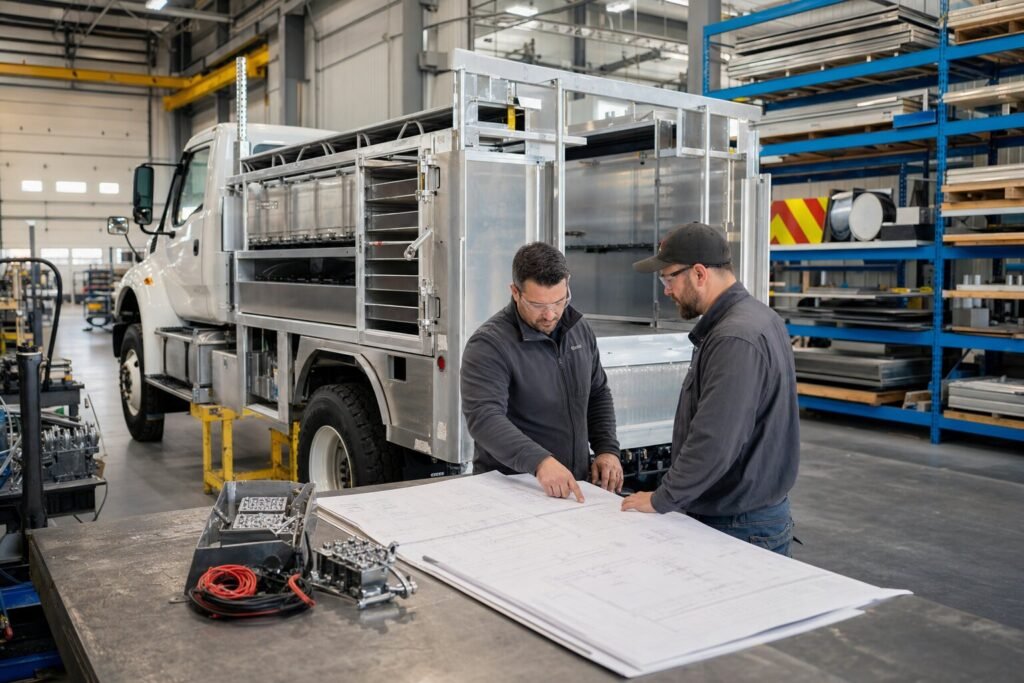
Custom traffic control truck lead time depends on chassis availability, engineering, component selection, fabrication, integration, inspection, and delivery requirements.
The most effective schedule starts with a defined operating mission. Ordering a chassis or individual components before the fleet agrees on payload, boards, attenuator, storage, power, and deployment needs can create rework.
How to Plan Lead Time for a Custom Traffic Control Truck: an expert checklist
- Define work-zone mission and required equipment
- Confirm chassis class, dimensions, and ratings
- Approve the upfit layout and component interfaces
- Identify long-lead boards, attenuators, and controls
- Reserve time for inspection, training, documentation, and delivery
Ask vendors to separate estimated milestones from firm commitments and to identify dependencies. Fleet teams should also plan temporary capacity if an existing unit will retire before the replacement is ready.
How to make the next decision
Start with documented conditions rather than assumptions. Western Highways Traffic Safety provides information and services relevant to custom traffic control truck lead time; the correct scope still depends on the property, equipment, documents, or project conditions involved.
Review the related guidance on choosing traffic control truck build and engineered upfit. These pages explain the available service context before you request a site-specific recommendation.
Questions to ask a provider
- What information do you need before recommending a scope?
- Which assumptions still need field verification?
- What is included, excluded, and documented?
- What conditions would change the recommendation?
Clear answers help customers compare scope and process instead of choosing from a headline alone. Keep records, photos, plans, model numbers, or ownership documents that are relevant to the service.
Frequently asked questions
What should be decided before requesting a quote?
Provide the operating use, preferred chassis, payload, attenuator, warning systems, storage, power, and delivery location.
Can customer-supplied equipment affect timing?
Yes. Compatibility review, shipping, condition, missing parts, and warranty coordination can affect the build.
When should operators review the layout?
Before fabrication. Operators can identify access, visibility, lifting, storage, and workflow issues that drawings alone may miss.
What happens before delivery?
The scope should define inspections, function tests, documentation, training, registration items, and any acceptance process.
Request a business-specific review
Use the Western Highways Traffic Safety contact or scheduling page to describe your situation and confirm the appropriate next step.