
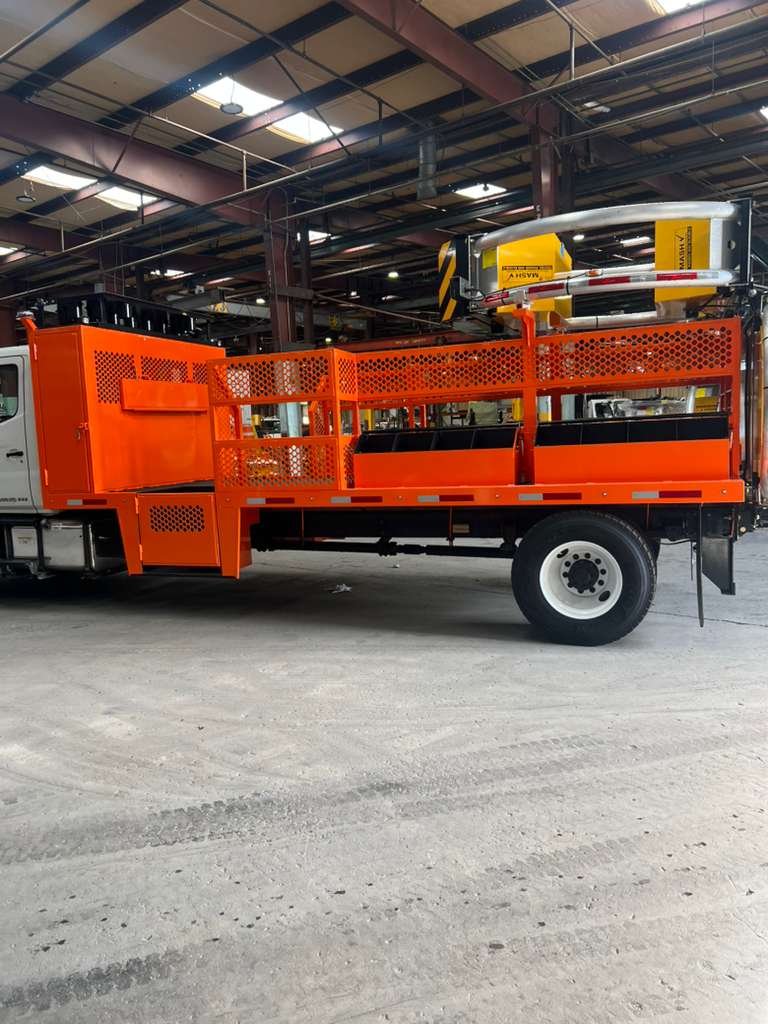
What to decide first
A safe, efficient TMA truck starts with the work you actually run: freeway shoulder closures, moving operations, utility support, short-duration lane control, or city street maintenance. A truck-mounted attenuator is only one part of the setup. The truck platform, rear body or bed, storage layout, rear visibility equipment, and service plan all affect whether the unit helps the crew work faster or creates delays in the field.
Buyers often begin by asking about a Scorpion truck or Blade truck, but the better first question is simpler: What combination of truck, attenuator, and work-zone equipment will keep crews protected and productive on the roads you actually maintain? That answer may point to a dedicated attenuator truck, a traffic control truck with a custom bed, a traffic control pickup truck for lighter assignments, or a build that also carries arrow boards, message boards, and sign storage.
Western Highways Traffic Safety Products works with contractors, municipalities, fleet managers, and agencies that need practical guidance on truck-mounted attenuators, custom truck builds, rentals, leasing, purchase options, and service support. From Fresno and the satellite facility in Justin, Texas, the goal is the same: put the right equipment behind the right crew for the right kind of work.
Best-fit summary
If your team runs high-speed freeway work, a purpose-built tma truck with a properly matched attenuator is usually the starting point. If your operations are mixed—urban streets, utility work, night closures, and mobile lane protection—you may get better value from a traffic control truck or traffic control truck beds configured around storage, visibility, and quick deployment. For short-term projects or variable demand, rental and leasing can preserve capital while keeping the fleet ready.
When buyers ask for a truck mounted attenuator for sale or compare a traffic control truck for sale, the key is not simply finding a unit on a lot. It is verifying whether the truck, attenuator, and support equipment fit the route, duty cycle, and compliance requirements of the job. That includes checking speed environment, mounting compatibility, rear overhang, lighting, axle ratings, and how the crew will stage cones, signs, and boards.
How to compare Scorpion, Blade, and other TMA options
Different attenuator families solve the same safety problem in different ways. The best choice depends on truck class, operating profile, service expectations, and the project spec. Buyers may hear names such as Scorpion TMA, Blade TMA, Metro TMA, TMA Pro, or TMA Max. Those product names matter because the frame, energy management design, replacement parts, and mounting requirements can affect lead time, repair strategy, and fleet standardization.
Use the comparison below as a buying checklist rather than a spec sheet substitute.
| Decision point | What to compare | Why it matters in the field |
|---|---|---|
| Attenuator type | Scorpion, Blade, Metro, TMA Pro, TMA Max | Mounting, parts support, repair approach, and how the unit behaves on the truck |
| Truck platform | Class, wheelbase, GVWR, rear frame geometry | Affects stability, braking, body space, and whether the attenuator fits correctly |
| Work zone use | Freeway, arterial, utility, event control, mobile operations | Determines whether you need high-speed protection or lighter traffic control support |
| Support equipment | Arrow boards, message boards, sign racks, cone storage | Reduces separate vehicles and cuts setup time for crews |
| Uptime plan | Repairs, rentals, spare parts, service center access | Prevents a small collision from sidelining the truck for weeks |
| Procurement path | Purchase, lease, rental, custom build | Matches cash flow and project duration to the actual fleet need |
What a good attenuator truck should include
A proper truck mounted attenuator setup is more than the impact device at the rear. The truck should be configured so the crew can deploy, stage, and recover without wasted motion or unsafe climbing. For many buyers, the best setup combines rear protection with thoughtful storage and visibility features.
- Correct rear mounting geometry: The attenuator should be installed for the specific truck chassis and body layout, not improvised around an available unit.
- Rear visibility and lighting: Backup cameras, work lights, brake lights, and conspicuity features support safer backing and night operations.
- Storage for traffic devices: Cones, signs, and delineators need a place that is secure, fast to access, and balanced across the truck.
- Board integration: Arrow boards and message boards should be positioned so they can be read clearly without interfering with access or rear protection.
- Service access: Components should be reachable for inspection, maintenance, and replacement after impact or wear.
If your operation also uses a raised pavement marker truck, blade truck, or hook and go truck, standardizing parts of the fleet can reduce training time and make the vehicle pool easier to manage.
Truck-mounted attenuator guidelines to verify before you buy
Truck-mounted attenuator guidelines vary by agency, project, jurisdiction, and manufacturer. Before signing off on a unit, confirm the current requirements that apply to your work. That means checking the project plans, state or municipal specifications, and the manufacturer documentation for the exact truck and attenuator combination.
At a minimum, buyers should verify the following:
- Intended speed environment: Make sure the attenuator and truck class fit the posted speeds and exposure of the work zone.
- Mounting compatibility: Confirm the frame, rear overhang, and attachment method are approved for the selected platform.
- Impact-direction expectations: Understand how the unit is designed to perform in the event of a rear-end impact in the field.
- Inspection interval: Ask how often the unit should be checked and what wear points require routine attention.
- Replacement and repair process: Know which components are replaceable, what requires a full rebuild, and how long the truck may be out of service after a hit.
- Documentation: Keep installation records, serial numbers, photos, and service reports with the fleet file.
For teams working through California and Texas requirements, or managing multi-state fleets, it helps to have a supplier that understands practical deployment issues, not just product labels. Western Highways can help buyers talk through those details before they commit to a specific build.
Inspecting a used TMA truck before purchase
A used tma truck can be a strong value if it has a clear history and the right service records. It can also become an expensive problem if the attenuator has unseen damage, the truck bed was modified poorly, or the vehicle was used in a way that does not match your application.
Before buying a used unit, inspect it as both a truck and a safety system.
- Frame condition: Look for cracking, patching, bent rails, corrosion, or signs that the truck took a hard rear impact.
- Attenuator condition: Check for missing hardware, damaged energy-absorbing elements, uneven wear, or signs of improper storage.
- Mounting integrity: Verify that the brackets, pins, and welds match the application and have not been altered without documentation.
- Bed and body layout: Make sure the bed still suits your crew’s equipment and does not block maintenance access.
- Electrical system: Test lights, boards, cameras, charging circuits, and any auxiliary controls.
- Title and usage history: Ask how the truck was deployed, how often it was hit, and whether any insurer or agency required repairs.
For a deeper review, a resource like analyzing a used TMA truck in terms of highway safety can help buyers structure the inspection conversation. If a used unit looks attractive on price alone, compare it against the cost of putting the same truck through needed repairs, replacements, and reconfiguration.
Rental, leasing, or purchase: which path fits the job?
There is no single right answer for every agency or contractor. The right buying path depends on how often the truck is used, how quickly work changes, and whether the fleet needs flexibility or long-term ownership.
| Option | Best for | Watch-outs |
|---|---|---|
| Rental | Short projects, surge demand, emergency coverage, seasonal work | Availability, compatibility, and any restrictions on use or damage responsibility |
| Leasing | Predictable monthly planning and ongoing fleet refresh | Terms, mileage or usage limits, and maintenance responsibility |
| Purchase | Long-term fleet demand and standardization | Capital outlay, depreciation, and long-term service planning |
| Custom build | Specialized crews, mixed-device setups, and unique storage needs | Lead time, design coordination, and the need to validate every component |
If your operation needs a traffic control truck for sale or a truck mounted attenuator for sale but your budget cycle is not ideal, ask whether a lease or rental can bridge the gap. A good rental or lease solution can keep the job moving while you plan a permanent fleet purchase.
How to think about traffic control truck beds and pickup-based units
Not every job needs the same platform. A full-size traffic control truck with custom bed space makes sense when the crew carries substantial signage, cones, spare parts, and boards. A traffic control pickup truck can be a better fit when the work is lighter, the sites are smaller, or the team needs better maneuverability in neighborhoods and utility corridors.
For buyers comparing traffic control truck beds, the most useful questions are practical:
- How fast can the crew load and unload the devices they use every day?
- Can the bed support secure storage for signs, stands, cones, and small tools without creating a clutter problem?
- Is the layout safe when one worker is loading at night or in poor weather?
- Does the bed leave enough capacity for the attenuator, boards, and any future equipment additions?
When the truck also carries a message board or arrow board, the layout should be designed around visibility and access, not just around the empty bed dimensions. A good fleet build keeps equipment where it can be reached quickly and stored safely after the shift.
Where sign storage and board equipment fit into the decision
The best traffic safety trucks are not just protected at the rear; they are ready to work as a complete deployment platform. If the vehicle also needs arrow boards, message boards, or traffic sign storage racks, plan those components at the same time as the attenuator installation.
That approach matters because later additions can create balance problems, overload a bed section, or interfere with the attenuator structure. Teams that standardize their fleet around racks and board placement tend to spend less time hunting for missing equipment and more time setting a work zone.
For example, a custom build may include 3S swing racks, a storage system for signs, or a dedicated board package tied to the truck’s duty cycle. If your vehicles also need visibility tools, the pages on arrow and message boards for traffic safety and choosing the right message board are useful starting points.
Common buyer mistakes that create downtime
Many expensive problems start with a good intention and a rushed decision. The following mistakes show up often in fleet work and contractor purchases.
- Choosing the attenuator before defining the job: The truck and the work environment should drive the configuration, not the other way around.
- Ignoring bed and storage planning: A unit with poor device storage becomes slow and frustrating to use.
- Overlooking repair access: Some configurations look clean in the yard but are difficult to service after a hit.
- Buying on price alone: The lowest upfront cost can become the highest total cost if the truck spends too much time down.
- Skipping documentation checks: Missing records make it harder to verify what was installed and how to maintain it.
- Not planning for replacement after impact: A safety vehicle should have a path back to service before the project starts.
If you already have a fleet, a short maintenance playbook helps. Resources like avoid fleet downtime and 24/7 equipment repair for TMA trucks are useful for building a response plan before something bends, breaks, or gets hit.
How to compare price without losing sight of value
Buyers frequently ask about scorpion truck mounted attenuator price or a broader scorpion truck mounted attenuator quote. Price matters, but it should never be the only comparison point. Two trucks with similar purchase numbers can produce very different total costs if one has better serviceability, faster repair options, or a more practical bed and storage layout.
When evaluating price, ask for a clear breakdown of:
- Truck chassis and upfit components
- Attenuator model and mounting package
- Arrow board, message board, camera, and lighting equipment
- Custom truck bed or rack work
- Service, warranty, and support expectations
- Rental, lease, or purchase terms if multiple paths are available
A unit with a slightly higher up-front cost may still be the better decision if it is easier to repair, easier to staff, and more likely to stay in service. That is especially true for agencies and contractors that cannot afford a truck to sit idle during a lane closure window.
Planning for repairs, replacements, and fleet uptime
Every TMA fleet needs a downtime plan. Rear-end impacts, parts wear, and operational damage are part of the reality of work-zone protection. The question is not whether a truck will ever need service; it is how quickly it can return to work when it does.
Before you order or assign a unit, ask these questions:
- Can the attenuator be inspected and repaired locally or through a service center?
- Are replacement parts supported for the model you are selecting?
- What is the process for documenting impact damage and returning the truck to service?
- Do you need a backup rental or spare unit during heavy work periods?
- Will the same vendor help with the truck, attenuator, boards, and storage components?
That is where a supplier with both product and service experience becomes especially valuable. Western Highways Traffic Safety Products supports buyers with repair help, custom builds, rentals, leasing, and practical fleet planning so the equipment decision does not end at the sales order.
Who should consider a Scorpion, Blade, or other TMA solution?
A Scorpion construction truck or a similarly configured attenuator unit is often a fit for highway contractors, utility crews, public works departments, and service managers responsible for exposed roadside work. A blade truck or other specialized setup may suit fleets that already standardize around a particular platform and need to simplify training or spare parts.
In practice, the best fit depends on your operating pattern:
- High-speed freeway work: Prioritize rear protection, serviceability, and compliance with the applicable spec.
- Mixed urban and suburban work: Balance compactness, visibility, and easy access to tools and devices.
- Utility and maintenance work: Choose a layout that can carry boards, cones, signs, and crew gear without clutter.
- Emergency or temporary demand: Consider rentals or leasing to preserve flexibility.
For crews focused on deploying TMAs in heavier freeway environments, the guidance in best practices for deploying TMAs on Texas freeways is useful even outside Texas because it highlights the operational questions that matter most in fast-moving work zones.
Checklist before you place an order
Use this checklist when you are comparing a traffic control truck, attenuator truck, or a fully custom build.
- Defined job type and typical roadway speeds
- Chosen truck class and chassis constraints
- Selected attenuator family and mounting approach
- Confirmed bed, rack, and storage requirements
- Identified board, camera, and lighting needs
- Reviewed repair and downtime plan
- Compared rental, lease, and purchase options
- Verified project spec, agency rules, and manufacturer documentation
- Accounted for driver training and inspection routines
- Confirmed delivery, pickup, or service support logistics
If your fleet includes multiple vehicle types such as a hook and go truck, a raised pavement marker truck, or a pickup-based traffic control unit, this checklist helps standardize what gets reviewed before purchase or deployment.
How Western Highways supports buyers
Western Highways Traffic Safety Products serves West Coast and nationwide buyers from Fresno, California, with a satellite facility in Justin, Texas. The practical advantage is access to a broad set of traffic safety equipment and support options in one place: truck-mounted attenuators, TMA trucks, Scorpion and Blade TMA solutions, custom truck builds, rentals, leasing, purchase support, message boards, arrow boards, traffic sign storage racks, and fleet storage solutions.
For buyers comparing a traffic control truck to a dedicated tma truck, that support can make the decision easier because the conversation is about the whole fleet use case, not only the attenuator. Western Highways traffic truck products are built around real jobsite needs: crew access, visibility, repair planning, and getting the truck back on the road quickly.
If you need help deciding whether a new build, a used unit, a rental, or a lease fits your budget and project schedule, speak with a team that understands the equipment and the field realities.
What to have ready before you call
To get useful guidance quickly, gather a few details before you contact the team:
- Truck class, chassis make/model, and wheelbase if known
- Whether you need a new build, used unit, rental, lease, or repair
- Road types and speed ranges where the truck will be used
- Need for arrow boards, message boards, or sign storage racks
- Any agency or project requirements you must follow
- Desired delivery, pickup, or service location
- Timeline, budget range, and whether uptime is critical
Call Western Highways Traffic Safety Products at (559) 394-7762 for help choosing the right TMA truck, attenuator, sign storage, arrow board, message board, rental, leasing, purchase, or custom truck solution.
