
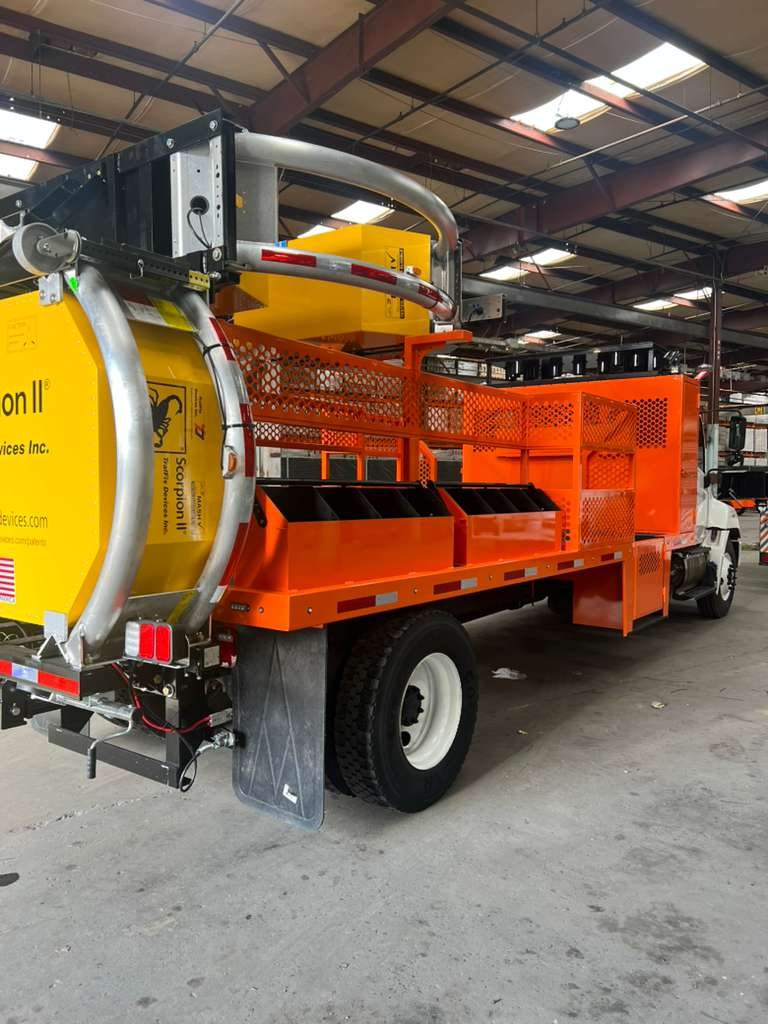
For highway contractors, public works teams, and fleet managers, the decision is rarely just “which attenuator should we buy?” It is usually a broader equipment question: which truck platform, which rear protection package, which visibility equipment, and which support plan will keep crews productive without creating avoidable risk. A good setup has to match the roadway, the route miles, the crew size, and the way your operation actually stages and moves from job to job.
A truck-mounted attenuator can be the difference between a survivable rear impact and a catastrophic intrusion into a work zone, but only if the whole system is put together correctly. That means the truck, the attenuator, the mounting geometry, the warning devices, the storage layout, and the maintenance routine all need to work as one unit. For buyers comparing a truck mounted attenuator for sale against a rental, lease, or custom build, the practical questions are the same: What is being protected, how often will it be used, and who will maintain it?
Western Highways Traffic Safety Products works with buyers who need more than a single component. Based in Fresno, California, with a satellite facility in Justin, Texas, the company supports traffic safety customers across the West Coast and nationwide with TMA trucks, Scorpion and Blade TMA solutions, traffic control truck beds, arrow boards, message boards, storage racks, repairs, rentals, leasing, and custom builds.
What to decide first
Before comparing models or asking about a scorpion truck mounted attenuator price, lock down the operating profile. The right answer for a utility contractor on night work is not always the right answer for a municipal lane-closure crew or a highway maintenance fleet that runs daily.
- Deployment frequency: daily use, seasonal use, or emergency standby
- Roadway type: freeway, arterial, local road, bridge work, or rural shoulder work
- Speed environment: where the vehicle will be exposed to higher-speed traffic
- Crew function: shadow vehicle, lane-closure support, sign truck, or multi-role traffic control truck
- Ownership model: purchase, lease, rental, or short-term project support
- Maintenance capacity: in-house service, outside repair, or turn-key support
That first decision tree matters because it influences nearly every other specification, including truck class, bed design, lighting package, sign storage, and whether a Scorpion, Blade TMA, or another platform is a better operational fit.
Quick recommendation
If the truck will be used regularly and must stay in rotation for a long project schedule, buyers usually benefit from a purpose-built TMA truck with the attenuator matched to the chassis and the site work. If the need is temporary or seasonal, a truck mounted attenuator rental or attenuator truck rental can be a smarter way to keep the project moving without committing capital too early. If the operation has multiple duties—spotting, lane closures, signing, and moving gear—look closely at traffic control truck beds and storage layout, not just the rear crash cushion.
For agencies and contractors who need to compare options quickly, Western Highways can help evaluate whether the best path is a truck mounted attenuator, a crash attenuator truck, a custom traffic control truck, or a package that combines all of the above.
What a truck-mounted attenuator actually does
At a practical level, a truck-mounted attenuator is a crash cushion mounted to the rear of a support vehicle. Its purpose is to absorb and manage impact energy if a following vehicle strikes the back of the truck. In work zones, that rear-end strike can happen because of traffic congestion, driver inattention, reduced visibility, lane shifts, or sudden speed changes.
So when someone asks, what is a truck mounted attenuator or what is an attenuator truck, the plain answer is this: it is a protective system that turns a truck into a buffer vehicle for road crews. A truck mounted attenuator does not eliminate risk, but it helps create a controlled sacrificial zone behind the work space. That is why buyers often treat the attenuator truck as a safety tool and a traffic management asset at the same time.
In some fleets the same unit is called a tma truck, a truck attenuator, or a crash attenuator truck. The name changes, but the buying problem stays the same: the vehicle must be visible, stable, well maintained, and appropriate for the roadway and the crew’s tasks.
Comparison guide: rental, lease, or purchase
| Option | Best for | Main advantage | Watch-outs |
|---|---|---|---|
| Truck mounted attenuator rental | Short projects, seasonal demand, temporary closures | Lower upfront commitment and faster deployment | Availability, wear condition, and project-specific fit |
| Attenuator truck rental | Crews needing a ready-to-go support vehicle | Convenience and speed when a unit is needed now | Confirm chassis condition, equipment package, and terms for damage or downtime |
| Lease | Mid-term use with planned budget structure | Predictable monthly cost and access to newer equipment | Lease terms, mileage or usage limits, and service responsibilities |
| Purchase | Long-term fleets and recurring work | Ownership, customization, and long-run value | Capital cost, maintenance planning, and lifecycle management |
A rental can be the right answer if your crew is supporting a bridge project, emergency repair, or temporary lane shift. Purchase makes more sense when the truck will be used often enough that downtime and service planning matter more than initial price. Leasing can bridge the gap for agencies that want newer equipment without tying up as much capital.
How to compare attenuator options without getting lost in product names
Product names can sound similar, and buyers often end up comparing a Scorpion model against a Blade TMA or another MASH/TL-3 discussion without first confirming the actual work requirement. The smarter approach is to compare function first.
Questions that matter more than brand names
- Does the attenuator match the vehicle class and mounting requirements?
- Will it support the speeds, work patterns, and exposure expected on the job?
- Is the truck configured for the crew’s daily task, or just for the rear impact function?
- How easy is it to inspect, repair, and return to service?
- What is the downtime plan if the unit is damaged in the field?
For some buyers, a Scorpion truck mounted attenuator is the familiar choice. For others, a Blade TMA or Metro TMA configuration may better align with fleet standards, packaging needs, or service support. The right answer depends on the project and the chassis, not just the label on the product literature.
Where price fits in
When buyers ask about scorpion truck mounted attenuator price, they are usually trying to understand total project cost, not just the equipment line item. That total includes the truck chassis, mounting package, warning devices, storage, lighting, service access, and any modifications needed to make the unit usable in the field. A lower sticker price can still be expensive if the truck spends too much time out of service or lacks the storage and visibility the crew needs.
Truck mounted attenuator guidelines buyers should verify
Any discussion of truck mounted attenuator guidelines should start with the project spec, the roadway authority, and the manufacturer requirements for the exact unit being considered. There is no substitute for checking the current documents that govern the job.
- Verify the required crash performance and roadway application. Do not assume one attenuator fits every freeway or municipal requirement.
- Confirm the truck class and mounting geometry. The chassis and bed need to support the equipment safely and within spec.
- Check visibility needs. Arrow boards, message boards, lighting, and retroreflective treatments may be part of the operational package.
- Review maintenance intervals. A TMA that is not inspected and repaired on schedule is a liability.
- Document training. Drivers, spotters, and supervisors should know how to deploy, stow, and inspect the system.
Agencies and contractors should also confirm local and project requirements for MASH or TL-3 discussions with the appropriate professional, because compliance language can vary by state, agency, and roadway type. Do not rely on a past project’s paperwork as a substitute for current verification.
Inspection worksheet for a used TMA truck or rental unit
Whether you are evaluating a used tma truck, a rental, or a unit returned from another project, inspect the full system—not just the attenuator itself.
| Area | What to check | Why it matters |
|---|---|---|
| Rear attenuator assembly | Visible damage, deformation, missing hardware, worn indicators | Impacts can compromise energy management and safe redeployment |
| Mounting structure | Frame attachment, weld quality, corrosion, alignment | The system must stay secure under load and during transport |
| Truck platform | Tires, brakes, suspension, lights, camera systems, warning lamps | The support vehicle is part of the safety package |
| Storage and bed layout | Traffic sign storage racks, tools, cones, and access paths | Good storage reduces clutter and field delays |
| Visibility equipment | Arrow boards, message boards, lighting, reflectors | Approaching traffic needs early, clear guidance |
| Service records | Repairs, parts replaced, inspection dates, damage reports | Documentation helps buyers judge true condition |
For deeper due diligence, buyers can also review resources such as the company’s page on analyzing a used TMA truck in terms of highway safety and the guide on whether your TMA trucks are crash test compliant. Those checks help separate a serviceable unit from one that only looks ready.
Why the truck platform matters as much as the attenuator
One common mistake is treating the attenuator as the entire solution. In practice, the truck platform has to handle the real job. A truck mounted attenuator may be the rear-protection system, but the rest of the vehicle determines how efficient and safe the crew can be during a shift.
For example, a traffic control truck may need room for sign boards, cones, channelizing devices, spare parts, and crew gear. A dedicated traffic control truck bed can improve organization and reduce the time crews spend climbing over loose equipment. If the truck doubles as a sign carrier, look closely at storage racks and how the load affects access to the attenuator and daily inspection points.
That is why many buyers compare a standard support truck against a more purpose-built setup. A well-designed traffic control truck can be more productive than a generic chassis with equipment bolted on later.
Custom builds, storage, and support equipment
Beyond the crash cushion, the best fleet setups usually include the right support gear. Western Highways frequently works with teams that need a complete work-zone package: message boards, arrow boards, sign storage, fleet storage, and custom truck builds that match how the unit will actually be used.
- Arrow boards: useful for lane shifts, merges, and advance warning
- Message boards: helpful when crews need dynamic communication for changing conditions
- Traffic sign storage racks: keep signs secure and accessible
- Fleet storage: supports organization across multiple trucks or yards
- Custom truck builds: align the vehicle with agency standards and daily field work
Buyers often discover that the cost of poor storage design shows up later in lost time, damaged gear, or unsafe loading practices. If your operation moves from one work zone to another all day, the bed design deserves as much attention as the rear attenuator.
Training and field use
Truck mounted attenuator training is not just for drivers. Supervisors, fleet leads, maintenance staff, and crew members need to know how the unit is supposed to be deployed, positioned, inspected, and taken out of service when damage is suspected.
Training topics worth covering
- Safe deployment and stowing sequence
- Pre-trip and post-trip inspections
- How to spot damage after a near miss or impact
- Visibility setup, including arrow board and message board use
- Limits of the vehicle’s protection zone
- Communication between driver, spotter, and field crew
Operators sometimes assume a TMA truck can simply be put in position and forgotten. That is a mistake. The truck works best when it is actively managed as part of the traffic control plan. For broader deployment planning, the guide on best practices for deploying TMAs on Texas freeways is a useful operational reference even for non-Texas fleets because it focuses on real deployment discipline.
Repair, replacement, and downtime planning
Even a well-run fleet will eventually need service. After an impact, a truck mounted attenuator may need anything from minor parts replacement to major structural repair. The critical point is speed of diagnosis and return to service.
Questions to ask before an incident happens:
- Who inspects the unit after an impact?
- What parts are commonly replaced?
- Can the attenuator be repaired locally or does it need shipment?
- How long will the truck be out of service?
- Is a rental or backup unit available during repairs?
Western Highways supports field operations with repair and service options, and buyers looking to reduce interruption should also look at the company’s material on 24/7 equipment repair for TMA trucks and avoiding fleet downtime. In a real fleet, those support choices often matter as much as the initial purchase.
How to compare a crash attenuator truck against a general traffic control truck
These terms are often used loosely. A crash attenuator truck is usually understood as a vehicle with rear crash protection as its main safety function. A traffic control truck may be more of a multi-purpose work vehicle, carrying signs, lighting, cones, and other deployment equipment in addition to or sometimes alongside an attenuator.
Choose the crash-protection-first approach when:
- the vehicle regularly shadows crews in high-risk traffic zones
- rear impact exposure is the primary concern
- the work zone setup demands a dedicated protective unit
Choose a more flexible traffic control truck when:
- the truck has to carry more signing and field equipment
- the vehicle changes roles between projects
- crews need organized access to gear throughout the day
Many fleets benefit from both types of assets, assigned by job type rather than trying to make one truck do every task poorly.
Procurement checklist for safer purchasing
If you are writing a spec, approving a PO, or vetting a vendor quote, use a simple checklist before finalizing the deal.
- Confirm the roadway use case and speed environment.
- Identify whether the unit will be rented, leased, or purchased.
- Match the attenuator model to the truck chassis and work scope.
- Review truck mounted attenuator guidelines for the job.
- Check the visibility package: arrow board, message board, lighting, reflectors.
- Evaluate bed layout, storage racks, and access to tools and signs.
- Ask for service records, repair history, and inspection documentation.
- Plan for training and field rollout.
- Set a downtime plan for impact repair or maintenance.
- Verify delivery, pickup, and support options for your location.
For many buyers, the fastest path is to talk through the full use case before asking for a quote. A truck mounted attenuator for sale might be the wrong answer if the true need is a custom traffic control truck with a specific bed and accessory package.
Regional support and logistics
West Coast fleets often need equipment that can be staged quickly, serviced quickly, and moved without unnecessary complexity. With a base in Fresno and a satellite facility in Justin, Texas, Western Highways is positioned to support contractors, municipalities, and agencies that need practical delivery, pickup, and service coordination across California, the broader West Coast, and nationwide work zones.
That regional footprint matters when a project window is short or the unit needs to be turned around between jobs. It also helps when buyers want a direct conversation about a TMA truck, Blade TMA, Scorpion setup, sign storage, or custom truck build that fits local operating conditions.
If you are also comparing broader fleet capabilities, the company’s pages on building custom traffic safety trucks and custom truck beds for traffic control operations are useful complements to this guide.
Common mistakes buyers make
- Buying by price alone: the cheapest quote can create maintenance and downtime problems later
- Ignoring the bed and storage layout: crews lose time if gear is hard to access
- Skipping training: an unfamiliar TMA can be misused or damaged
- Assuming one model fits every job: project conditions change the best solution
- Not planning for repairs: an impact without a backup plan can stop the schedule
- Overlooking documentation: missing records make fleet management harder
A disciplined buyer looks at total field use, not just the badge on the attenuator or the headline number on the quote.
Best-fit summary
If your operation needs a dedicated rear-protection vehicle, a tma truck with the right attenuator and warning package is usually the strongest long-term option. If the work is temporary, truck mounted attenuator rental or attenuator truck rental may provide the most efficient path. If the vehicle must also carry signs, boards, and crew gear, pay close attention to traffic control truck beds, storage racks, and the overall build. If you are comparing Scorpion, Blade, Metro TMA, or other solutions, verify the actual job requirement before choosing a product family.
That is the practical way to approach what is a truck mounted attenuator, what is an attenuator truck, or how does a truck-mounted attenuator enhance safety in workzones: by connecting the safety function to the actual work your team performs every day.
FAQ
What is the difference between a TMA truck and a regular traffic control truck?
A TMA truck is built around rear crash protection from a truck-mounted attenuator. A traffic control truck may emphasize signing, storage, boards, and field support gear. Some units do both well, but not every truck should be expected to serve every role.
Is renting a truck mounted attenuator a good idea for short-term projects?
Yes, if the project duration is limited and you need a ready-to-deploy unit without long capital commitment. The key is to inspect the rental carefully, confirm the exact equipment package, and review damage and downtime terms before the truck goes into service.
How do I know whether a Scorpion or Blade TMA is the better choice?
Start with the project spec, vehicle class, maintenance support, and how the truck will be used in the field. The better choice is the one that fits your operational requirements, service plan, and mounting setup—not just the one with the most familiar name.
What should I ask before I buy a used attenuator truck?
Ask for inspection records, repair history, impact history, service documentation, and any available information about the bed, mounting structure, warning equipment, and truck chassis condition. A used unit should be evaluated as a full system, not just as an attenuator.
Can Western Highways help with custom builds and replacement support?
Yes. The company supports truck-mounted attenuators, TMA trucks, rentals, leasing, purchase options, custom builds, service, and related traffic control equipment. If you call, have your truck class, project use, location, and preferred equipment type ready so the discussion can move quickly.
Ready to compare options?
Call Western Highways Traffic Safety Products at (559) 394-7762 for help choosing the right TMA truck, attenuator, sign storage, arrow board, message board, rental, leasing, purchase, or custom truck solution. To make the conversation more efficient, have the following ready: your project type, roadway environment, vehicle class, whether you need rental or ownership, any required support equipment, and the location where the truck will be used or serviced.
