
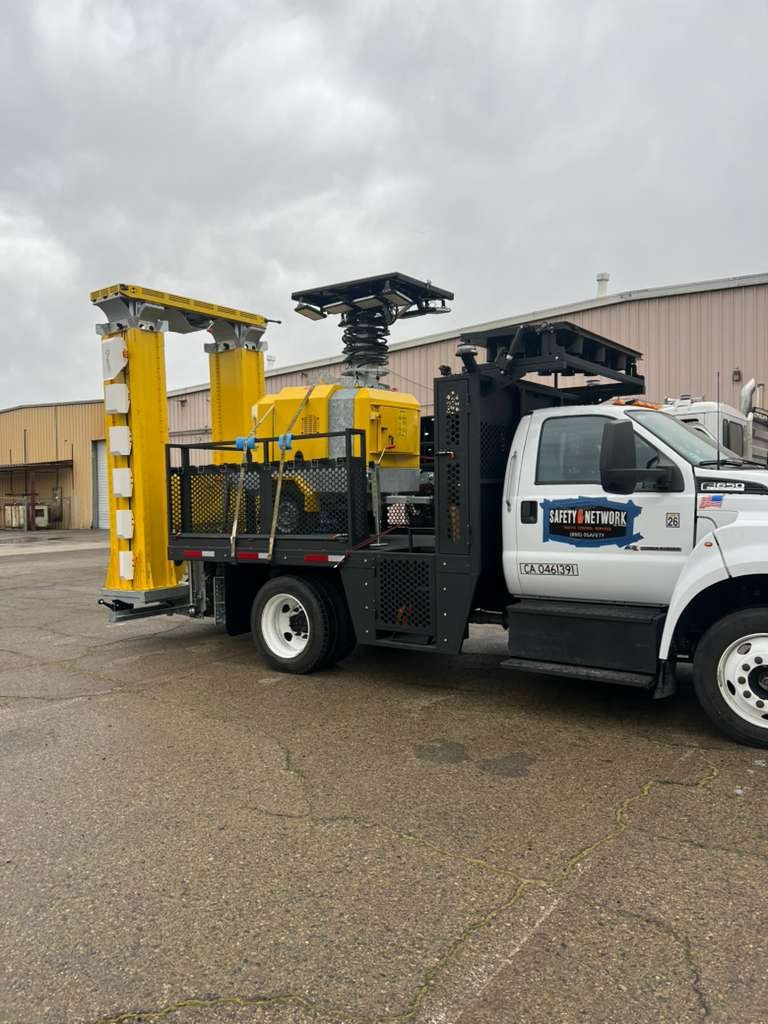
Field-tested traffic safety trucks do more than carry an attenuator. They protect crews, support lane closures, move signs and boards, and keep a work zone organized enough that the team can work quickly under pressure. For highway contractors, public works departments, fleet managers, and work-zone supervisors, the real decision is not just whether to buy a truck-mounted attenuator. It is how to build a safer, more usable traffic control truck that fits the way the crew actually operates.
The best setup depends on the job mix: freeway shadowing, short-duration lane closures, local road maintenance, striping support, sign placement, or emergency response. A TMA truck for one program may need a different chassis, rack system, board package, and service plan than an attenuator truck used for night work or seasonal highway projects. If your team is comparing a blade truck against a more general traffic control truck bed, or deciding between rental and purchase, the right questions are about uptime, storage, visibility, and what the truck needs to do before and after the attenuator deploys.
Western Highways Traffic Safety Products in Fresno, with a satellite facility in Justin, Texas, works with West Coast and nationwide buyers who need practical answers, not a sales script. That includes truck mounted attenuator rental options, purchase support, leasing, custom truck builds, repair service, and the kind of inventory planning that helps a fleet avoid downtime. For buyers comparing Scorpion TMA, Blade TMA, Metro TMA, TMA Pro, or TMA Max configurations, the decision should start with the work zone and the truck you can actually keep in service.
What to decide first
Before choosing a chassis or a specific attenuator, define the operational use case. A truck designed for freeway shadowing is not automatically the best fit for sign installation or general traffic control. A pickup-based unit may work for certain maintenance tasks, but it does not replace a properly equipped traffic control truck where payload, visibility, and onboard storage are part of the daily job.
- Primary job: lane closures, shadowing, striping, mowing, incident response, sign crews, or pavement marking support.
- Operating speed and roadway type: local streets, divided highways, rural freeways, or high-speed interstate work.
- Frequency of use: daily fleet asset, seasonal backup, or occasional rental.
- Crew size and tools: number of workers, cones, drums, signs, stands, barricades, and communication gear.
- Support expectations: self-contained truck, hook-and-go style unit, or a specialized build with racks and onboard storage.
Those answers shape the rest of the build. If the truck will be moved between crews, a hook and go truck concept may make more sense than a highly specialized one-off build. If the job is mainly marking and sign support, a raised pavement marker truck or a platform with dedicated storage could be more efficient than a large all-purpose setup. If the work zone requires frequent board changes, arrow board visibility, or signage staging, the bed and rack layout matter as much as the attenuator itself.
Quick recommendation for buyers comparing options
If the truck will protect a live work zone at highway speeds, prioritize the attenuator and chassis fit first. Then build the rest of the truck around the crew’s storage and visibility needs. If the truck is mostly a support vehicle with occasional exposure, a lighter-duty traffic control setup may be enough. If you are unsure, ask for a configuration review that covers the truck, the attenuator, the racks, and the repair path as one package.
How a truck-mounted attenuator fits into the fleet
A truck mounted attenuator is a crash-energy management device mounted to the rear of a truck so it can absorb impact energy in a controlled way during a hit. In buyer conversations, you may hear truck mounted attenuator guidelines, truck attenuator, attenuator truck, or even product names like Scorpion truck. The exact terms vary, but the decision is the same: the attenuator must match the truck, the roadway, and the work-zone role.
Many fleets also ask what is a truck mounted attenuator when they are building a program from the ground up. The practical answer is simple: it is a rear-impact protection system intended to reduce risk to workers and equipment in moving or stationary work zones. That does not replace safe traffic control practices, proper setup, or trained operators. It is one layer in a broader protection strategy.
When you are comparing a truck mounted attenuator for sale listing to a rental or leased unit, look beyond the device name. Confirm the mount style, the intended chassis range, the rear configuration, the service history if used, and whether the rest of the truck is ready for the work you plan to do. A well-selected attenuator on an undersized or poorly equipped chassis can create more problems than it solves.
Common truck and body configurations buyers compare
| Configuration | Best fit | Buyer focus | Common tradeoff |
|---|---|---|---|
| TMA truck | Highway shadowing, lane protection, live-traffic exposure | Attenuator match, chassis capacity, warning equipment | Less room if the body is not planned carefully |
| Traffic control truck | General work-zone support, signage, cones, boards, staffing | Storage, organization, visibility, access | May need a separate attenuator package for freeway work |
| Traffic control pickup truck | Smaller crews, municipal maintenance, lighter-duty tasks | Payload, tool storage, board mounting | Limited capacity for larger barricades and heavier equipment |
| Blade truck | Programs using Blade TMA solutions and a dedicated work-zone build | Rear protection system compatibility and serviceability | Setup must be matched to the specific use case |
| Raised pavement marker truck | Line-marking and pavement-marker placement support | Tool layout, material handling, crew efficiency | May not be the right platform for full shadowing duties |
| Hook and go truck | Multi-crew fleets that swap bodies or mission profiles | Interchangeability, tie-downs, standardized interfaces | Needs disciplined maintenance and changeover procedures |
Choosing between Scorpion, Blade, Metro TMA, TMA Pro, and TMA Max
Product names matter less than whether the system fits the truck and the job. Buyers often compare a Scorpion TMA with a Blade TMA or ask about Metro TMA, TMA Pro, and TMA Max because each program may favor a different balance of footprint, mounting approach, serviceability, or fleet familiarity. The right choice usually comes down to three questions:
- Can the chassis support the device and its operating conditions?
- Does the device fit the crew’s daily workflow and repair plan?
- Will the truck still be practical after the attenuator, boards, racks, and storage are installed?
For some fleets, the more useful distinction is not the brand family but whether the platform supports fast service turnaround. If the truck spends time at a repair center, the repair path matters almost as much as the initial purchase. That is especially true for agencies that cannot afford a long gap in freeway protection.
Traffic control truck setup: what a usable build should include
A reliable traffic control truck setup is about access and routine. Crews should be able to load, unload, inspect, and secure equipment without wasting time or climbing through clutter. Poor layouts slow the team down and increase the chance that something is left behind or damaged.
Items worth planning into the build
- Traffic sign storage racks for standard sign panels and portable sign stands.
- Arrow boards with a mounting position that preserves visibility and protects the unit during transport.
- Message boards or changeable message boards when the crew needs advance warning or lane guidance.
- Dedicated space for cones, drums, barricades, and replacement hardware.
- Secure tool storage for lights, chargers, radios, batteries, and deployment gear.
- Clear rear access for setup, inspection, and service checks around the attenuator assembly.
Buyers often underestimate how much organization matters. A truck with the right attenuator but no practical storage can become a bottleneck. On the other hand, a well-designed body with custom truck beds can speed up a crew every single day. For that reason, many buyers review a dedicated resource on custom truck beds for traffic control operations before finalizing the build.
What to inspect before you buy or lease
Whether you are reviewing a new build, a used truck mounted attenuator for sale, or a rental unit, inspect the same core items. Do not rely on the listing alone.
| Inspection area | What to verify | Why it matters |
|---|---|---|
| Chassis and payload | GVWR, axle ratings, suspension, tire condition, braking system | Wrong chassis capacity can affect performance and utility |
| Attenuator mount | Compatibility, alignment, welds, pins, locks, and hardware condition | Improper mounting creates safety and maintenance issues |
| Rear visibility | Camera coverage, lighting, reflective markings, obstruction points | Operators need clear awareness in live traffic |
| Storage and racks | Rattle-free, secure, accessible storage for signs and gear | Reduces damage and speeds deployment |
| Electrical system | Wiring, battery health, board controls, lighting circuits | Traffic equipment fails when the electrical system is neglected |
| Service documentation | Maintenance records, repair history, parts availability, training logs | Shows how the truck has been kept and whether it can stay in service |
If the truck is used, ask for an inspection process that covers the attenuator and the body together. A well-maintained truck can still be a poor purchase if the mounting system, electrical system, or storage layout has been neglected. Western Highways can help buyers review used assets and compare them against newer build options when they are deciding whether to repair, replace, or rent.
Truck mounted attenuator guidelines buyers should verify
There is no single rulebook that fits every agency and every project. Instead, buyers should verify the applicable truck mounted attenuator guidelines with the agency spec, DOT guidance, manufacturer instructions, and any site-specific traffic control plan. For many projects, the buyer is responsible for confirming that the vehicle, attenuator, and operating procedure meet the current project requirements.
- Verify the intended roadway classification and work-zone exposure.
- Confirm whether the attenuator is suitable for the chassis and mission profile.
- Check whether additional signage, lighting, or board placement is required.
- Review operator training expectations and daily inspection steps.
- Document maintenance intervals and repair triggers.
That last point matters. A truck can be mechanically available but still not ready for duty if a required inspection, repair, or training step is missing. Buyers who manage a larger fleet often standardize these checks so each unit is treated the same way before deployment.
Training and daily use: where fleets often lose time
The best equipment still fails if the crew is not comfortable using it. Truck mounted attenuator training should cover the actual vehicle in the fleet, not just a generic explanation of the device. Operators need to know how to inspect the truck, position it, move it, and report damage. Supervisors need a clear process for authorizing a unit after impact or service work.
Useful training topics
- Pre-trip inspection of the truck, attenuator, lights, and boards.
- Safe positioning in live traffic and during staging.
- Communications between the shadow vehicle, crew, and supervisor.
- Post-event inspection after a strike or near strike.
- Escalation steps for repairs, part replacement, or temporary removal from service.
If a team is new to TMAs, pair equipment delivery with a simple training plan and a written checklist. That is especially helpful for municipalities, contractors with rotating crews, and agencies that share units between districts. Western Highways supports buyers who need practical service guidance, not just a key handoff.
Rental, lease, or purchase: how to compare the economics
For many fleets, the decision between truck mounted attenuator rental, leasing, and purchasing depends on utilization. A rental can solve seasonal demand, emergency coverage, or a temporary replacement need. Leasing may help when you need predictable payments and a newer asset cycle. Purchasing often makes sense when the truck is in regular use and can be standardized across the fleet.
Use this comparison to narrow the choice
| Option | Best for | Watch for |
|---|---|---|
| Rental | Short-term projects, peak season, replacement during repair | Availability, pickup/delivery timing, familiarization time |
| Lease | Budget planning, asset rotation, fleet refresh strategy | End-of-term obligations, maintenance responsibility, mileage or usage terms |
| Purchase | High utilization, standard fleet build, long service horizon | Upfront cost, repair planning, storage, and training commitment |
It is also worth asking whether the rental or purchase includes the right body configuration. A buyer may need a full traffic control truck with storage and warning devices, not just a bare chassis with a rear device. If the job calls for a more complete package, ask about custom truck builds and whether the truck can be configured for signs, boards, and rack systems from the start.
Common mistakes that create downtime
Many fleet problems show up after the truck is already in service. The mistakes are usually predictable.
- Buying the attenuator first and the truck second.
- Ignoring how signs, boards, and cones will be stored and accessed.
- Choosing a chassis that is under-capacity for the full load.
- Skipping operator training because the equipment seems straightforward.
- Letting minor damage remain unresolved until the truck is needed urgently.
- Failing to standardize inspection and return-to-service procedures.
Fleet managers often discover that the real cost is not the initial purchase but the time lost when a unit is awkward to service or slow to deploy. That is one reason buyers compare the build quality, service support, and repair network before deciding where to place the order.
When a custom build is worth it
A custom build is justified when the crew has repeatable tasks that a standard setup does not handle well. The most common trigger is storage. If the team constantly moves cones, signs, message boards, backup gear, and repair tools between trucks, a custom layout can save labor and reduce damage.
Another good reason is mission specialization. A traffic control pickup truck may be right for some districts, while a larger truck with a dedicated traffic control truck bed and rear protection is better for freeway work. A raised pavement marker truck or a unit designed around lane-marking support may need a different rack plan than a truck used for general maintenance closures.
Western Highways also supports buyers looking at custom traffic safety trucks, fleet storage, and practical add-ons like backup cameras or specialized rack systems. The right answer is often to design around the crew’s most frequent task rather than around a hypothetical worst-case event.
Service, repairs, and keeping the truck in circulation
Even a strong purchase can be undermined by weak service planning. Ask in advance how repairs will be handled, who can perform the work, and how quickly the unit can move back into rotation after an incident. If your fleet uses a blade truck or another specialized attenuator platform, the repair pathway should be part of the procurement decision.
For some buyers, a service relationship is the deciding factor. That may include 24/7 support for urgent equipment repair, routine attenuator replacement guidance, or help with truck-mounted attenuator training after a new delivery. Western Highways serves buyers from Fresno and the broader California market, and through the Justin, Texas location, supports a wider regional and nationwide customer base that needs practical response, not just a parts list.
Useful buyer questions before you call
- What will the truck do most often: shadowing, sign work, lane setup, or mixed support?
- Do we need a rental, lease, purchase, or a temporary replacement while another unit is in repair?
- Which attenuator family fits the truck and the job: Scorpion, Blade, Metro TMA, TMA Pro, or TMA Max?
- What storage do we need for signs, arrow boards, message boards, and crew gear?
- Are there special project specs, agency requirements, or state guidance we must verify before delivery?
- Who will train the operators and manage inspections after deployment?
Best-fit summary for procurement teams
If your team needs a dependable traffic safety vehicle, start with the work-zone function and then build the truck around that purpose. A true TMA truck should not feel improvised. It should be matched to the chassis, outfitted with the right warning and storage systems, and supported by a repair and training plan the crew can actually use. A smaller traffic control pickup truck may be a good fit for lighter duties, but freeway exposure usually calls for a more complete setup. A truck mounted attenuator is one piece of the system; visibility, storage, inspection, and service are the rest.
For buyers comparing traffic control truck beds, a hook and go truck concept, or a dedicated attenuator truck, the smartest move is to treat the build as an operations decision. That means aligning the truck, the attenuator, the boards, and the storage with the job site and the crew.
If you need help choosing the right TMA truck, attenuator, sign storage, arrow board, message board, rental, leasing, purchase, or custom truck solution, call Western Highways Traffic Safety Products at (559) 394-7762. Have your chassis details, project type, work-zone speed environment, current fleet count, and any agency or DOT requirements ready so the team can help you compare the best-fit options quickly.
