
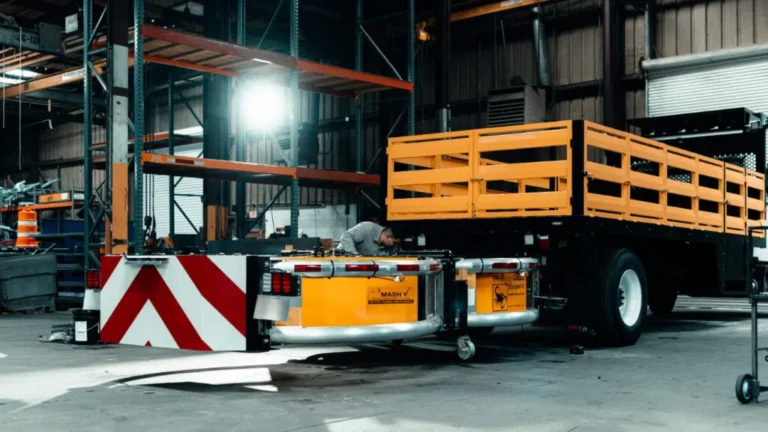
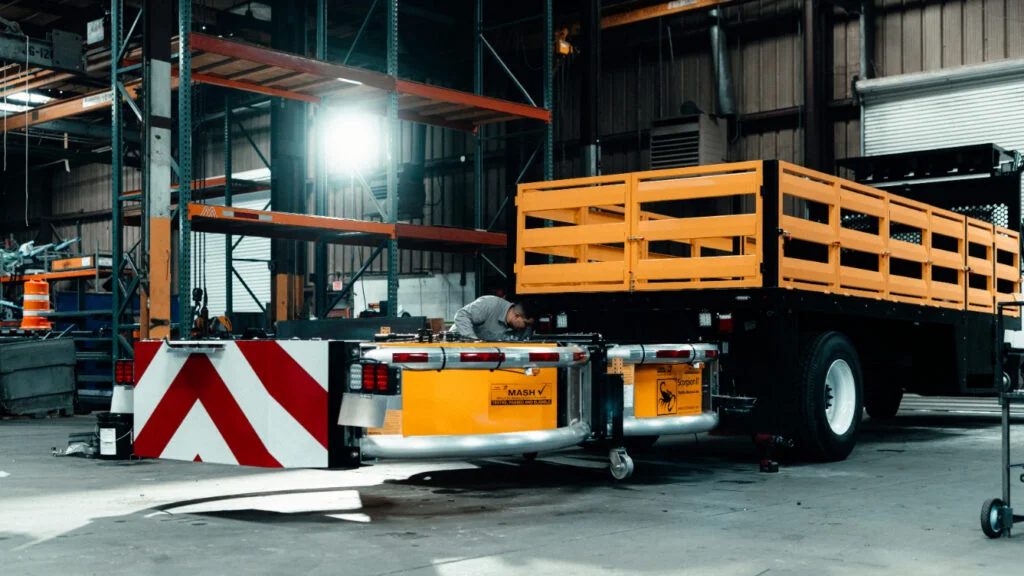
Buying or replacing a traffic control truck is a fleet decision, not just a vehicle purchase. The best build depends on how the truck will move through a work zone, how many cones, signs, and tools it must carry, what visibility equipment it needs, and how often it will be staged, driven, or repaired. A properly planned unit should support the crew’s daily workflow without crowding the bed, blocking access to tools, or forcing unsafe loading practices.
For agencies and contractors, the right procurement process starts with a clear use case: lane closure support, sign placement, attenuation behind a shadow vehicle, or a multi-purpose work zone truck that also handles transport and storage. From there, the buyer needs to compare chassis size, upfit design, truck body configuration, storage racks, backup cameras, arrow boards, message boards, and the truck-mounted attenuator that fits the job. Western Highways Traffic Safety Products works with traffic safety buyers across California, Texas, the West Coast, and nationwide to help match the build to the application.
Before you order, it helps to separate the must-haves from the nice-to-haves. A traffic control truck setup for a highway contractor may look very different from a municipal fleet truck that rotates among several crews. The right decision usually comes down to three questions: what the truck must carry, how fast the crew must deploy it, and what level of protection or visibility the operating environment requires.
What to decide first
Start with the job, not the equipment catalog. A strong fleet specification typically answers these points before any purchase order is written:
- Primary use: lane closure support, sign deployment, TMA shadowing, maintenance response, or mixed-purpose work zone service.
- Duty cycle: daily urban use, long-distance highway travel, short-route municipal work, or seasonal deployment.
- Payload needs: cones, drums, barricades, sign stands, extra arrow boards, traffic signs, tools, fuel cans, or spill response gear.
- Visibility requirements: rear-facing warning, overhead message display, lighting package, and camera coverage.
- Protection level: whether the truck needs a truck-mounted attenuator and how it will interact with the rest of the lane closure plan.
- Service model: in-house maintenance, local repair support, rental coverage, or lease-to-own planning.
Buyers often try to solve every need with one off-the-shelf unit. That can work for simple operations, but a true engineered upfit is usually better when the truck must support a specific crew workflow. A custom truck build can place racks, boards, tool storage, and access points where the crew actually uses them, which reduces missed steps and loading frustration.
Choose the chassis before you choose the body
For many buyers, the first fork in the road is the chassis class. A class 3 traffic control truck can fit many lighter-duty municipal and contractor needs, especially when the equipment load is moderate and the truck must remain nimble in tight city routes. A class 4 traffic control truck gives more room for heavier bodies, added storage, and larger equipment packages.
Neither class is automatically “better.” The right choice depends on payload, braking, turning radius, and the amount of gear that will live on the truck every day. A unit that is overloaded by a heavy body configuration or packed with too much hardware can wear out faster and become harder to handle in traffic. On the other hand, a chassis that is too small can limit future expansion and force a premature replacement.
When comparing chassis, review:
- cab length and crew access
- GVWR and expected loaded weight
- rear axle capacity
- axle ratio and route profile
- serviceability and local parts support
- how the chassis interfaces with the intended upfit
If the truck will carry a TMA, sign storage, and a full complement of lane closure gear, the chassis decision should be made with the completed build in mind. Buyers who only spec the cab and chassis first often discover later that the desired equipment combination consumes more weight and space than expected.
What a solid truck body configuration looks like
The body is where the build succeeds or fails in daily use. A well-planned truck body configuration should protect gear, shorten loading time, and keep the crew from lifting heavy items awkwardly. The body should also support predictable workflow: where the cones go, where the signs go, where spare hardware goes, and where the recovery or repair items go.
Key body decisions include:
- Deck length and width: enough room for the equipment that actually rides on the truck, not just a minimal fit.
- Compartment placement: quick-access storage for hand tools, straps, and common repair items.
- Bed height: high enough for clear storage planning but low enough for practical loading.
- Rear access: ladder, step, bumper, or platform options for safe use.
- Side access: doors and compartments that reduce the need to climb in and over gear.
For buyers comparing traffic control truck beds or custom truck beds, the practical question is not only what fits, but how often the crew has to move the same item twice. If a sign stand is buried behind a stack of cones, the body design is working against the crew. If the traffic sign storage racks are placed so signs can be staged in sequence, the truck becomes faster and safer to use.
Storage racks, sign storage, and daily workflow
Storage is more than convenience. On a work zone truck, poor storage can slow deployment, create pinch points, and lead to damaged equipment. The most effective builds make high-use items immediately accessible and separate them from items that are only needed occasionally.
Strong storage planning usually includes:
- Traffic sign storage racks for organized, protected sign transport
- Fleet storage areas for extra cones, bases, straps, and consumables
- Dedicated spaces for message board accessories and controller hardware
- Secure stowage for radios, flashlights, and small tools
- Protected compartments for items that should not shift during transport
Western Highways offers storage solutions such as rack systems that help crews keep signs and related traffic control gear organized. If your fleet has mixed equipment from different crews, ask how the storage layout will work across all of them. The best layout is often the one that reduces hunting, stacking, and handoff confusion during shift changes.
For buyers evaluating rack options, useful comparisons include clearance, tie-down method, ease of loading with gloves on, and whether the system leaves room for future equipment additions. A rack that fits the current inventory but blocks a future upgrade can create avoidable rework later.
Visibility equipment that belongs in the build
A traffic control truck has to be seen and understood quickly. Visibility equipment should be selected as part of the build, not added as an afterthought. At minimum, most buyers should compare rear warning systems, overhead display needs, camera coverage, and driver visibility aids.
Common components include:
- Arrow boards for lane guidance and advance warning
- Message boards for longer, more specific instructions
- Backup cameras to support reverse maneuvering and docking
- Lighting and conspicuity packages suited to the operating environment
The choice between arrow boards and message boards depends on the job. Arrow boards are useful when the direction of movement is simple and immediate. Message boards are better when crews need to communicate closures, detours, or changing conditions. In many fleets, the answer is not either/or but how the two fit the truck’s daily role. Western Highways’ resources on choosing between arrow boards and message boards can help buyers compare those uses more carefully.
Backup cameras are often overlooked on custom truck builds, but they matter when crews are reversing near equipment, lane closures, pedestrians, or adjacent work vehicles. The camera system should support the actual rear geometry of the truck after the body, attenuator, and rack systems are installed.
Where the attenuator changes the whole specification
If the truck will serve as a shadow vehicle or crash cushion platform, the truck-mounted attenuator is one of the most important decisions in the package. The attenuator affects weight, rear overhang, center of gravity, body layout, and maintenance access. It also shapes how the truck is used in the field, because some deployments require more rear clearance or different staging practices.
Western Highways specializes in TMA trucks and works with buyers comparing Scorpion and Blade TMA solutions as well as discussions around MASH/TL-3 expectations, depending on project requirements and the applicable specifications. Buyers should confirm the exact unit, chassis interface, and project acceptance needs with the manufacturer, agency, and governing standard for the job.
Useful questions to ask before choosing the attenuator package:
- What lane closure or shadowing role will the truck perform most often?
- Will the truck spend more time on freeway work or city maintenance?
- How often will the attenuator be deployed, folded, repaired, or replaced?
- Does the selected body leave enough room for safe service access?
- How will the rear geometry affect visibility and backing?
If your team is building or rebuilding a TMA truck, it may help to review practical guidance on customizing an attenuator truck and on how truck-mounted attenuators support work zone safety.
Comparison guide: how the main build choices differ
| Decision point | Best for | Tradeoff to watch | What to verify |
|---|---|---|---|
| Class 3 traffic control truck | Lighter municipal use, tighter routes, moderate gear loads | Less room for heavy bodies and future expansion | Loaded weight, axle limits, equipment list |
| Class 4 traffic control truck | Heavier upfits, more storage, multi-crew support | May be less nimble in confined areas | Turning radius, maintenance access, final weight |
| Standard truck body | Simple transport and minimal gear needs | Limited organization and slower deployment | Compartment count, rear access, load security |
| Engineered upfit | Repeatable work zone operations and crew-specific workflow | More planning up front | Drawings, dimensions, weight distribution |
| Arrow board focus | Simple directional control | Less message flexibility | Visibility range, mounting height, power needs |
| Message board focus | Detours, closures, special instructions | More equipment management | Controller, mounting, storage, serviceability |
| TMA-equipped truck | Shadow vehicle and impact protection use | Added weight and rear complexity | Project spec, interface, service access |
This table is not a substitute for project-specific requirements, but it helps buyers frame the discussion before they ask vendors for quotes. The best procurement conversations are specific: what the truck must do, how it will be loaded, and what the final working weight will be.
Rental, leasing, or purchase: how to choose the right path
Not every fleet should buy immediately. The right acquisition method depends on duration, budget structure, replacement cycle, and urgency. Western Highways supports purchase options as well as rentals and leasing, which can help when a project starts before a permanent unit is ready.
Renting can make sense when:
- the need is short-term or project-based
- a fleet is covering a replacement during repairs
- you want to test a configuration before committing
- the operation needs a truck quickly while a build is completed
Leasing may work when:
- budget planning favors predictable payments
- you expect to refresh the fleet on a defined cycle
- the agency or contractor wants to preserve capital for other equipment
Buying is often best when:
- the truck will be used heavily over several seasons
- the build is highly specific to the operation
- the fleet wants long-term control over the upfit and service plan
If your team is undecided, the most useful comparison is not rent versus buy in the abstract. It is whether the current operation needs flexibility more than ownership, and whether the next 24 to 48 months will likely change the truck’s role. That answer often points to the right option faster than a generic finance comparison.
Inspection worksheet for a used truck or replacement unit
When evaluating a used TMA truck or a replacement chassis, inspect the truck as a working system, not as separate parts. A body in decent shape can still be a poor buy if the mounting points, wiring, camera system, or attenuator interface need major correction.
Use this checklist during review:
- Check the frame, mounts, and visible welds for damage, corrosion, or prior repair
- Verify the body doors, latches, and compartments open and close correctly
- Inspect storage racks for bending, wear, and improper tie-down points
- Test the backup cameras and display integration
- Confirm arrow board and message board operation, controls, and mounting stability
- Review attenuator condition, service history, and replacement intervals
- Look for electrical issues, loose wiring, or patchwork repairs
- Confirm that the truck’s configuration still matches the way your crew works today
Buyers considering a used unit may find it worthwhile to review Western Highways’ guidance on analyzing a used TMA truck in terms of highway safety and on crash-test compliance questions. Even when a truck appears serviceable, documentation and maintenance history are essential before putting it into production.
Common procurement mistakes to avoid
- Specifying the chassis before the load: weight and body needs should drive the chassis choice.
- Underestimating storage volume: crews usually need more space than the first equipment list suggests.
- Adding devices without a workflow plan: extra boards or cameras do not help if the layout slows deployment.
- Ignoring maintenance access: a great build can become a burden if service points are blocked.
- Forgetting replacement parts and repairs: long-term uptime depends on repair support, not only the initial build.
- Mixing roles in one truck without planning: a unit that must do everything may end up doing nothing especially well.
These mistakes are common because the first draft of a fleet specification often starts as a wish list. A better approach is to rank equipment by daily necessity, then make sure the body and chassis can support those items without compromise.
What to ask before you place the order
Good buyers ask questions that expose hidden costs, service gaps, and usage conflicts. Before final approval, ask the vendor or upfitter:
- What is the expected final working configuration, including body, racks, camera system, boards, and attenuator?
- How will the build affect weight distribution and rear access?
- Which parts of the build are standard, and which are custom to this operation?
- What documentation will be provided for maintenance and future repairs?
- How easy will it be to service the attenuator, boards, and electrical system later?
- What local support exists if the truck is staged in California or Texas, or moved across the West Coast?
- Can the design be adapted if the fleet later adds more storage or different warning equipment?
For buyers who value uptime, service support matters as much as the build itself. Western Highways provides repair and support options that can help keep a fleet moving after the truck is put to work. If you are balancing new builds with fleet maintenance, the repair side should be part of the procurement discussion from day one.
Field-tested planning advice for contractors and agencies
Contractors often need a truck that can move quickly between jobs, carry enough gear for changing site conditions, and remain simple to load at the end of a shift. Public works teams often need a more standardized truck body configuration that multiple operators can use safely. Fleet managers and procurement teams often need repeatability, serviceability, and a clear replacement schedule. Those are different priorities, and the best build should reflect that difference.
If your operation spans different regions, logistics can influence the best solution. A fleet in Fresno may want a different service or pickup plan than a team staging work in Selma, Bridgeport, or across Texas. When the schedule is tight, proximity to a service center or a pickup-friendly location can matter as much as the equipment itself.
For teams trying to improve an existing platform before replacing it, the page on benefits of custom truck beds for traffic control operations is a useful companion resource. It helps buyers think through how a better bed layout can improve safety, speed, and storage discipline.
Best-fit summary
If your operation is building a new traffic control truck or replacing an aging one, focus on three layers at once: chassis capacity, body workflow, and field visibility. A class 3 traffic control truck may be right for lighter routes and smaller equipment loads, while a class 4 traffic control truck can better support heavier bodies and more complete storage. If the unit will serve as a shadow vehicle or crash cushion truck, the attenuator and rear layout should drive the rest of the configuration.
The strongest custom traffic control trucks are not assembled by adding features at random. They are planned around the jobsite, the crew’s daily pattern, and the service life of the fleet. That is where engineered upfit decisions, storage racks, backup cameras, arrow boards, and message boards become part of one practical system rather than separate line items.
If you are mapping a new build, evaluating a used unit, or deciding between rental, leasing, and purchase, Western Highways Traffic Safety Products can help you compare the options and align the truck to the work zone. Call (559) 394-7762 and have your chassis preference, equipment list, route type, and service timeline ready. That will help the team guide you toward the right TMA truck, attenuator, sign storage, arrow board, message board, rental, leasing, purchase, or custom truck solution.
