
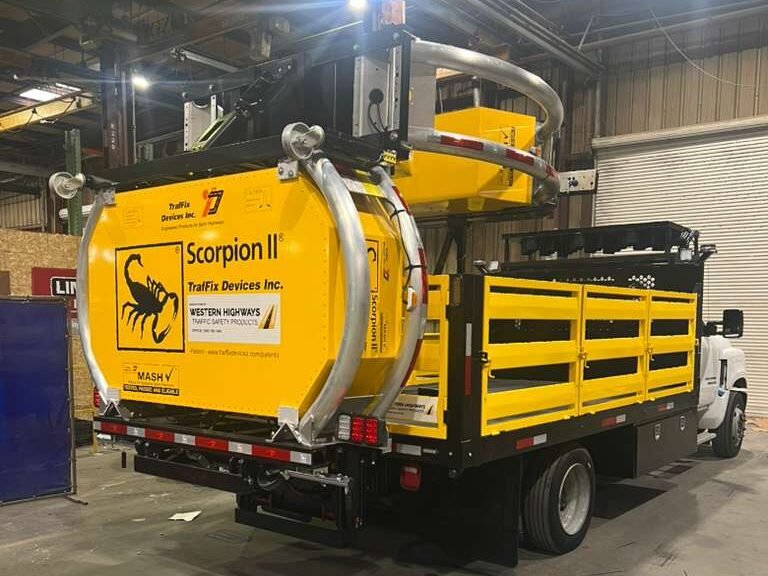
Choosing a truck mounted attenuator is rarely about a single product line. The right setup depends on how the truck will be used, what the project spec calls for, how often the unit will be deployed, and whether the fleet needs a dedicated crash truck or a flexible traffic control truck that can do more than one job. A municipality running short-term lane closures has different needs than a bridge contractor protecting moving crews in live traffic. A rental fleet, public works department, and highway contractor may all ask for a TL-3 impact attenuator, but the right chassis, body style, rear safety package, and support plan can look very different once the job is defined.
This guide is built for buyers comparing TMA requirements in the real world: compliance documents, deployment speed, service support, rental or purchase options, and the practical details that make a truck-mounted attenuator useful on the road instead of difficult in the yard. It also covers common choices like Scorpion TMA and Blade TMA packages, the role of message boards and arrow boards, and how sign storage, fleet storage, and custom truck builds affect everyday operations. If you need help narrowing the field, Western Highways Traffic Safety Products works with contractors, agencies, and fleets from Fresno and Selma to Bridgeport, across California, Texas, and the West Coast.
What to decide first
Start with the work, not the brand. The same attenuator truck can be a good fit for one crew and a poor fit for another if the operating environment changes. Before you compare models, answer these practical questions:
- How exposed is the rear of the truck? A mobile shoulder crew, short-duration lane closure, and stationary work zone each place different demands on the unit.
- Will the truck be driving in traffic or staged behind a crew? That changes the chassis choice, visibility package, and whether the truck needs to carry tools, signs, and board equipment.
- Is the unit being purchased, rented, leased, or assigned from a pool? Rental and leasing decisions often favor flexibility and easier maintenance planning.
- What does the project spec require? Verify the current agency, DOT, or contract language for the required impact rating, mounting, and any vehicle restrictions.
- Who will maintain and deploy it? A well-specified truck mounted attenuator still fails the fleet if it is too hard to inspect, repair, or stage quickly.
Those answers narrow the field more effectively than starting with a product brochure. A lot of expensive mismatch happens when buyers choose the attenuator first and the actual use case second.
Best-fit summary for common buyer types
| Buyer type | Typical priority | What usually matters most |
|---|---|---|
| Highway contractor | Fast deployment and dependable work-zone protection | Rear-end protection, chassis compatibility, visibility package, repair support, and durability under heavy use |
| Public works department | Compliance, ease of assignment, and budget control | Clear TMA requirements, straightforward maintenance, storage planning, and fleet flexibility |
| Fleet manager | Utilization and uptime | Standardized truck class, service access, spare parts planning, and the ability to rotate the unit between projects |
| Procurement team | Spec clarity and bid defensibility | Documented requirements, comparison points, rental vs. buy options, and reduced change orders |
| Work-zone supervisor | Deployment speed and crew safety | Simple setup, good visibility, dependable rear protection, and room for boards, cones, and signs |
How to match the attenuator to the job
A truck mounted attenuator is there to absorb energy and improve survivability in certain rear-end crash scenarios, but the best choice depends on how the vehicle will actually be used. The operating pattern matters as much as the label on the unit.
Stationary protection
If the truck will sit behind a crew, protecting workers during lane closures or utility work, look closely at rear-end exposure, sightlines, and the room available for a TMA deployment. A stationary setup can often support additional equipment such as an arrow board or message board, but only if the body and mounting system are planned around that load from the beginning.
Mobile shadowing
For moving operations, the truck has to remain manageable in traffic while still carrying a dependable TL-3 impact attenuator. The driver needs enough visibility and control to stay close to the work without creating a burden for the crew. This is where chassis selection and rear-end geometry matter more than many first-time buyers expect.
Mixed-use fleets
Some fleets need one unit to cover multiple roles: traffic control truck during one shift, crash truck during another, and equipment carrier on the next. In those cases, custom truck beds, traffic sign storage racks, and fleet storage planning can make the difference between a versatile asset and a cluttered compromise.
Comparing common TMA platforms
There is no universal winner between platforms such as Scorpion TMA, Blade TMA, Metro TMA, TMA Pro, or TMA Max. The right one depends on fit, operational habits, maintenance access, and the details in your project spec. Treat the comparison as a field decision, not a brand contest.
| Comparison point | What to check | Why it matters |
|---|---|---|
| Impact rating | Verify the required MASH TL-3 level or other agency requirement | Sets the baseline for acceptable use on the job |
| Truck fit | Chassis, bed height, mounting geometry, and rear overhang | A poor fit can create handling issues or deployment problems |
| Deployment style | Manual, semi-automatic, or other operational handling preferences | Impacts setup speed and crew workload |
| Serviceability | Repair access, parts availability, and inspection ease | A fleet unit that sits idle hurts project schedules |
| Added equipment | Arrow board, message board, storage racks, cameras, and lighting | Determines whether the truck can support the full work-zone package |
| Ownership model | Purchase, rental, or leasing | Changes maintenance burden, utilization strategy, and cash flow |
In practice, a Scorpion TMA may fit one fleet’s operating style while a Blade TMA better suits another’s chassis or service preferences. Buyers should ask for current manufacturer and project documentation, then compare the actual build details rather than relying on a model name alone. If a contractor plans to move between different states or agencies, that document review becomes even more important because truck mounted attenuator guidelines can vary by jurisdiction and contract language.
What a good TMA specification should include
Many purchase problems begin with a vague spec. A solid spec does not need to be long, but it should be precise enough to prevent surprise costs later. At minimum, it should identify the following:
- Required crash performance level and the standards referenced by the project owner.
- Compatible chassis class or vehicle weight limits.
- Mounting and geometry requirements for the attenuator truck.
- Desired equipment package, including arrow boards, message boards, lighting, cameras, and sign storage.
- Operational role: stationary protection, mobile shadowing, or mixed-use fleet assignment.
- Service expectations including inspection intervals, repair turnaround, and replacement part access.
- Ownership model: truck mounted attenuator rental, lease, or outright purchase.
When the spec is incomplete, buyers often discover that the truck is technically acceptable but operationally awkward. A unit can meet the performance target and still be poorly suited to the crew, the route, or the maintenance shop.
Questions to ask before you buy, rent, or lease
- What is the exact work-zone role of the truck? Ask whether it is meant for live-lane protection, mobile shadowing, or utility support.
- What current documentation supports the build? Request the manufacturer information, vehicle fit notes, and any project-specific paperwork needed by your agency.
- How will the unit be stored? Fleet storage space affects whether a folded attenuator, tool rack, or sign storage package makes sense.
- What happens after a minor impact? Clarify repair options, inspection steps, and whether the truck can return to service quickly.
- Will the truck need to carry other devices? Message boards, arrow boards, and traffic sign storage racks can change weight distribution and access.
- Is rental availability part of the plan? A short-term project may justify a truck mounted attenuator rental, while recurring work may favor purchase or leasing.
Inspection points that separate a workable unit from a problem unit
Whether you are evaluating a used TMA truck, a new build, or a rental, look beyond the paint. The most useful inspection points are practical and visual.
- Rear structure: Check for deformation, corrosion, cracked welds, and damaged mounting points.
- Deployment function: Confirm that the attenuator raises, lowers, locks, and stores as intended.
- Chassis condition: Review tires, brakes, suspension, lights, and underbody condition.
- Electrical system: Verify lighting, board power, warning systems, and camera operation.
- Visibility package: Make sure the truck supports safe lane presence and proper night work.
- Accessory load: Confirm that arrow boards, message boards, and storage hardware do not interfere with safe access or balance.
- Documentation: Gather maintenance history, inspection records, and any repair notes tied to past impacts.
If you are reviewing a used truck or a fleet transfer, one of the best references is a structured evaluation like analyzing a used TMA truck in terms of highway safety. It helps buyers focus on condition, fit, and inspection history rather than just mileage.
Common mistakes buyers make
- Choosing a model before defining the job. The wrong fit for the crew usually becomes the most expensive option.
- Ignoring storage and transport. A truck with no room for boards, cones, or signs creates avoidable yard congestion.
- Overlooking the service path. If repairs require excessive downtime, the unit may miss more work than it covers.
- Assuming every TMA works the same way. The operational feel of a Scorpion TMA can differ from a Blade TMA or other platform.
- Failing to confirm current requirements. Project specs and agency rules can differ across California, Texas, and other West Coast or national jobs.
- Not planning for the rest of the truck. A good attenuator truck often needs cameras, boards, storage racks, and custom bed features to be truly useful.
Rental, leasing, or purchase: how to think about ownership
The right ownership model depends on utilization. A seasonal contractor or short-duration project team may not need to commit capital to a full purchase. A municipal fleet with recurring lane closures may find ownership easier to manage over time. Leasing can sit between the two if you need flexibility with predictable use.
When truck mounted attenuator rental makes sense
- Short-term projects with known duration
- Temporary surge needs after a contract award
- Testing a chassis or deployment style before purchase
- Emergency coverage while another unit is in repair
When purchase is usually stronger
- Recurring work zones and steady utilization
- Agency or contractor standardization
- Need for custom truck builds and permanent accessory packages
- Long-term budget planning and fleet consistency
When leasing deserves a close look
- Desire to preserve cash flow
- Need for newer equipment cycles
- Uncertain demand over the next few seasons
- Interest in matching the unit to evolving TMA requirements
For buyers weighing those paths, it helps to talk through what is available now, what can be built to order, and what service support exists after delivery. Western Highways can help compare purchase, rental, and leasing options without pushing every project into the same model.
How add-on equipment changes the truck
The attenuator is only one part of the system. A well-planned traffic control truck usually needs additional equipment to function efficiently on real jobs.
Arrow boards and message boards
These devices improve lane guidance and public communication, especially on moving work or complex merges. The right choice depends on visibility, mounting space, and how often the truck shifts from one project to another. For buyers comparing options, a separate guide such as choosing between arrow boards and message boards for effective traffic control can help define the communication role before the build starts.
Traffic sign storage racks
Signs that are hard to reach or poorly stored slow the crew down and can create clutter in the bed. Storage planning matters on every truck mounted attenuator platform, especially when the unit must also carry cones, stands, and other field gear. Accessories like 3S swing racks or other rack systems can improve access when they are chosen around the actual inventory carried by the crew.
Fleet storage and custom truck beds
For fleets that stage multiple trucks, the bed layout can make or break efficiency. Custom truck beds, rack systems, and storage locations should be planned so the attenuator truck remains easy to deploy, inspect, and return to service. If the truck is also expected to support broader traffic control operations, a build discussion such as custom traffic control trucks is often the right place to start.
Deployment habits that protect crews and equipment
Even the right TMA can be undermined by poor deployment. Supervisors should make sure the operating plan is simple enough for the crew to repeat correctly every time.
- Stage the truck so the rear protection aligns with the highest exposure point.
- Confirm board visibility before traffic enters the work area.
- Keep the unit clear of loose gear that can shift during movement.
- Verify that driver sightlines and rear camera coverage are clean.
- Use consistent pre-shift checks so small issues are caught before the truck rolls.
- Document any impact, repair, or unusual deployment event immediately.
For crews working across variable freeway conditions, the operational lessons in 7 best practices for deploying TMAs on Texas freeways can translate well to other high-speed environments, especially where traffic speed and shoulder geometry increase risk.
Service support matters as much as the initial build
Many buyers compare trucks on the day they are delivered and forget to compare them on day 200. That is a mistake. A good attenuator truck should be easy to inspect, repair, and return to work. Service support becomes critical when the fleet depends on the unit for live-lane protection.
Ask about repair capability, parts access, and local support. If the truck has to sit because a component is damaged, every day of downtime affects project scheduling and exposure. For that reason, some buyers keep repair support close to their core operations and review options like 24/7 equipment repair for TMA trucks when uptime is mission-critical.
Western Highways supports buyers from Fresno and surrounding California markets, with additional reach through its Justin, Texas facility. That matters when your operations need delivery coordination, pickup options, or a practical service path instead of a long wait for a specialty unit.
A simple buyer checklist
| Checklist item | Pass / Needs review |
|---|---|
| Project spec confirms the required impact rating | |
| Chassis matches the intended work-zone use | |
| Attenuator type fits the deployment style | |
| Arrow board or message board is planned if needed | |
| Storage for signs, cones, and tools is accounted for | |
| Maintenance and repair path is clear | |
| Rental, lease, or purchase choice fits utilization | |
| Delivery, pickup, and fleet storage plan are realistic |
What to verify in the paperwork
Before a truck mounted attenuator goes to work, verify the paperwork that supports the build and the assignment. That usually includes:
- Project or agency specification language
- Manufacturer documentation for the specific TMA configuration
- Maintenance and inspection records
- Repair history if the unit is used
- Rental or lease terms covering damage, downtime, and replacement
- Any internal fleet assignment notes for the driver or crew
If the truck is a used or reassigned unit, verify prior damage and repair documentation carefully. A unit can look ready while still carrying hidden service issues that affect both performance and downtime.
Buyer’s note on California, Texas, and broader West Coast operations
Operating conditions vary. A contractor working in California may face different project expectations than a fleet supporting jobs in Texas or across several West Coast states. That is why the best TMA purchase conversations stay grounded in current project requirements, local agency expectations, and the practical realities of transport and service. Fresno and Selma buyers often want quick access to inventory and pickup options. Bridgeport and more remote teams may care more about delivery coordination and dependable support after the truck enters service. A national fleet may need all of it.
For that reason, the best procurement conversation is not just about finding a tma for sale. It is about matching the truck, the attenuator, and the support plan to the way your team actually works.
Quick recommendation
If you are narrowing down choices today, use this sequence:
- Confirm the project spec and impact rating requirement.
- Define the truck’s job: stationary, mobile, or mixed-use.
- Choose the chassis and body package around that job.
- Compare Scorpion, Blade, and other TMA options by fit, serviceability, and documentation.
- Decide whether rental, leasing, or purchase gives the best operational value.
- Plan the full truck package: boards, racks, cameras, lighting, and storage.
That sequence prevents the most common mistake: buying a capable attenuator truck that still cannot support the actual project.
FAQ
What is the difference between a truck mounted attenuator and a crash truck?
A crash truck is often the operational role or field term for a truck carrying rear impact protection, while a truck mounted attenuator is the equipment on the vehicle. In practice, buyers care about the combined system: chassis, attenuator, visibility gear, and deployment method.
How do I know whether a TL-3 impact attenuator is the right fit?
Start with the project spec and agency requirement. If the contract calls for MASH TL-3 or a similar level, match the truck and attenuator package to that requirement and verify the documentation for the exact configuration you are considering.
Are Scorpion TMA and Blade TMA interchangeable?
No. They are different systems and should be evaluated on fit, deployment style, support, and the way they integrate with your truck. The right choice depends on the job, not just the model name.
Should I rent or buy a truck mounted attenuator?
Rent if the job is short, seasonal, or unpredictable. Buy if the unit will be used repeatedly and can be standardized across the fleet. Leasing can help when you want flexibility without tying up as much capital.
What should I bring up when I call about a TMA truck?
Have your project type, desired truck class, current spec language, preferred ownership model, and any needed add-ons such as arrow boards, message boards, sign storage racks, or custom bed features. That makes the conversation much more efficient.
Ready to spec the right unit?
Call Western Highways Traffic Safety Products at (559) 394-7762 for help choosing the right TMA truck, attenuator, sign storage, arrow board, message board, rental, leasing, purchase, or custom truck solution. Before you call, have ready the project location, the required use case, the truck class if known, and any current spec or agency notes. If you already have a unit in mind, bring the make, model, and questions about service, delivery, or fleet assignment so the team can help you compare the options quickly and accurately.
