
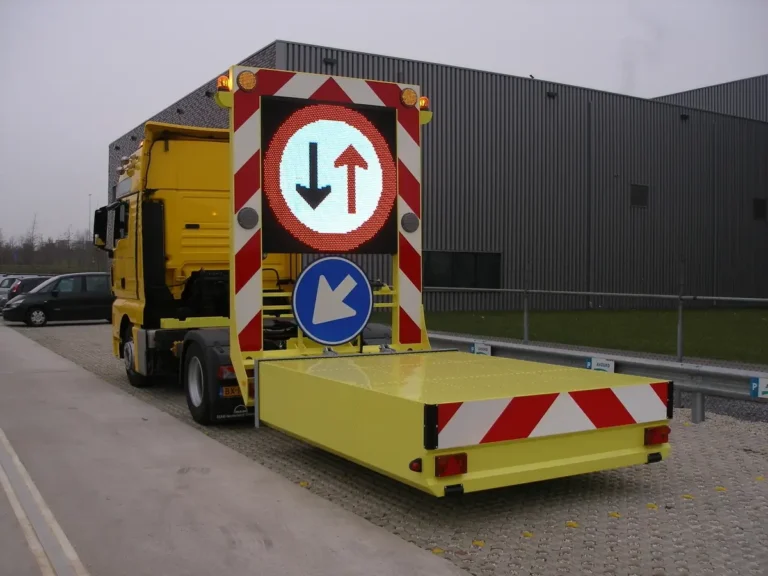
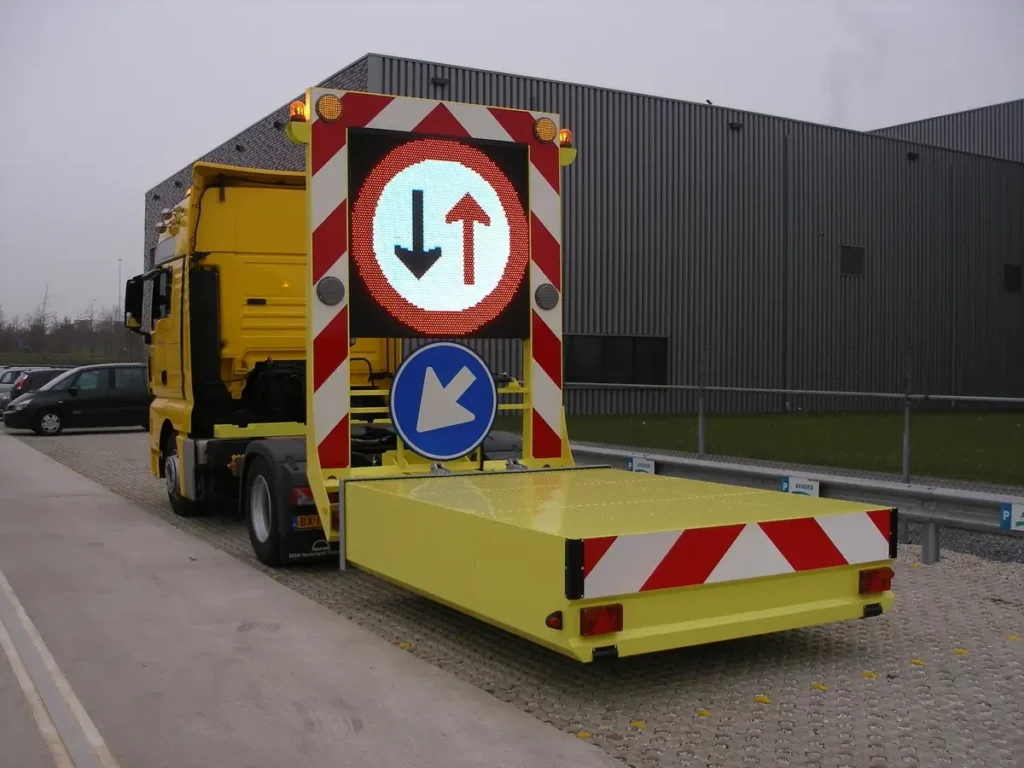
Work-zone signaling gear only helps when the crew can deploy it fast, read it from a distance, and keep it operating through long shifts, heat, vibration, and transport. A good setup for a traffic control truck is not just a board on a frame. It is the right combination of message visibility, arrow guidance, mounting hardware, power, storage, and support behind the equipment when something needs repair or replacement.
For highway contractors, public works teams, fleet managers, and work-zone supervisors, the decision usually comes down to a practical question: what equipment will communicate clearly, fit the vehicle, and hold up in daily use? That may be a cms board, a truck mounted message board, an arrow board for trucks, or a broader package built around a TMA truck, traffic sign storage racks, and service support. Western Highways Traffic Safety Products works with buyers across California, Texas, the West Coast, and nationwide to match that package to the job, not just the spec sheet.
If you are comparing traffic message boards for sale, reviewing a cms board traffic control package, or deciding whether you need arrow boards for traffic control instead of a full message display, this guide breaks down the decisions that matter in the field.
What to decide first
Start with the job, not the equipment category. Different crews need different signaling tools depending on where the truck operates, how often the board moves, and whether the message must change during the shift.
- Static lane guidance: Often served by arrow boards for trucks or truck mounted arrow boards.
- Route detours, closures, and public notices: Usually better handled by electronic highway message boards or a cms message board.
- Short-duration utility work: May need a compact truck mounted message board that sets up quickly and stores safely.
- Highway maintenance and agency response: Often benefits from a package that pairs message boards with a TMA truck or attenuator truck.
The wrong starting point is buying the biggest or most feature-rich board available. Oversizing can create weight, wind, storage, and electrical problems. Undersizing can leave the crew with messages that are technically present but not readable fast enough for moving traffic.
How electronic boards actually help in the field
One buyer question comes up often: electronic highway message boards communicate what? The short answer is that they communicate warnings, instructions, lane changes, detour information, and timing updates. In practical terms, that means the board should do three jobs well: get attention, deliver the message in time, and remain readable in changing light and traffic conditions.
A well-chosen board can support:
- Advance warning for construction zones and lane shifts
- Detour directions and route changes
- Incident response and temporary road closures
- School, municipal, or utility traffic control work
- Public-facing messaging where a trailer may not be practical
That is why many teams compare a cms board, a traffic control message board, and a roadside message board together rather than as isolated products. The same project may need more than one form of communication.
CMS board, message board, or arrow board?
These terms get used loosely, but they do not always mean the same thing. The comparison below helps separate the roles.
| Equipment type | Primary purpose | Best fit | Common buying mistake |
|---|---|---|---|
| CMS board / cms message board | Displays words, warnings, and route guidance | Closures, detours, public notice work, variable instructions | Choosing a board that is hard to read at the speed of traffic |
| Traffic control message board | General-purpose work-zone communication | Contractors and agencies needing flexible messages | Ignoring power and mounting requirements on the actual truck or trailer |
| Truck mounted message board | Permanent or semi-permanent board carried on the vehicle | Crew trucks that move daily and need fast deployment | Not checking fold-down clearance, weight, and cab visibility |
| Arrow board for trucks | Shows directional arrows or caution patterns | Lane closures, merge guidance, short work zones | Using an arrow board when a text message is needed to explain the closure |
| Roadside message board | Placed near the work zone or approach area | Temporary setups that can be positioned for visibility | Overlooking anchoring, placement, and theft/security concerns |
What makes a board easy to use, not just easy to buy
Buyers sometimes focus on display size and overlook the operational details that drive daily satisfaction. A board becomes useful when the crew can deploy it, understand it, maintain it, and secure it without wasting time.
1. Visibility in real conditions
Look at how the board reads in bright sun, dusk, dawn, rain, dust, and glare from headlights. A display that looks strong indoors may not perform the same on a freeway shoulder or a long rural approach.
- Can a driver understand the message quickly at approach speed?
- Does the display remain legible from the intended distance?
- Are message zones and characters large enough for the route?
2. Power and uptime
A board that relies on a power setup the crew cannot support is a liability. Ask how the board is powered during normal use, how it behaves when the truck is shut down, and how long it can remain operational during staging or overnight work.
- Is the battery system sized for your duty cycle?
- Does the truck electrical system support the load?
- What is the maintenance routine for charging and inspection?
3. Mounting and transport
Truck mounted message boards and truck mounted arrow boards must survive road vibration, loading, and daily parking. Check whether the mount interferes with tailgates, storage boxes, lifts, or other truck equipment. A setup that looks clean on paper can become awkward once cones, tools, and attenuator hardware are added.
4. Controller simplicity
Field crews need fast operation. A control layout that requires too many steps invites mistakes. The best boards are the ones your operators can set correctly under pressure without hunting through menus or second-guessing the display mode.
5. Serviceability
Plan for replacement parts, repairs, and downtime before you buy. If a board needs attention, a provider with repair support, such as Western Highways’ service-focused options for crews operating through Fresno, Selma, Bridgeport, and beyond, can matter as much as the board itself.
When an arrow board is the better choice
Arrow boards for traffic control are often the right tool when the message is simple: merge left, merge right, keep right, or stay alert for a closure. They are especially useful when the crew needs a compact, highly visible signal on a truck or trailer.
An arrow board may be a better fit than a text display when:
- The work zone pattern is standard and predictable
- The crew needs a fast visual cue rather than a written explanation
- Space on the truck is limited
- The operation demands very quick setup and takedown
By contrast, a cms board traffic control setup is more useful when the message changes by phase, location, or schedule. A project with lane shifts on Monday and a detour on Tuesday often needs a true message board, not just an arrow pattern.
Truck-mounted versus roadside: how to choose
The mounting style affects almost everything: storage, deployment time, maintenance, theft risk, power management, and how the crew stages the vehicle at the site.
Truck mounted message boards
These work best for fleets that move daily and need the board to travel with the vehicle. They are often chosen for traffic control trucks, utility trucks, and response vehicles that must stay ready to roll.
- Pros: fast deployment, fewer separate pieces, better vehicle integration
- Tradeoffs: added weight, mounting complexity, possible visibility or clearance issues
Roadside message boards
These are a better fit for some temporary deployments where the board can sit near the approach and remain in place for a longer duration. They can also work when the truck must leave the area or when the sign needs a different viewing angle than the vehicle can provide.
- Pros: flexible placement, good for extended temporary work
- Tradeoffs: transport and staging effort, security and anchoring considerations
What a buyer should inspect before ordering
Use a simple inspection worksheet before you commit to a cms board, a highway message board, or an arrow board package. The same checklist helps whether you are buying new equipment, evaluating used units, or comparing rentals and leasing.
| Inspection item | What to verify | Why it matters |
|---|---|---|
| Display readability | Message size, contrast, viewing distance, daytime and nighttime performance | Prevents unreadable messages in traffic |
| Vehicle fit | Mounting points, clearance, weight, bed space, fold-down or travel position | Avoids interference with other truck equipment |
| Electrical support | Battery, charging, connectors, controller access, backup behavior | Reduces downtime and dead-board calls |
| Durability | Frame condition, wiring protection, corrosion, vibration resistance | Extends life in daily fleet use |
| Operator workflow | Menu logic, preset messages, controls, training needs | Improves speed and reduces errors |
| Documentation | Manuals, maintenance records, spec sheets, project requirements, agency standards | Supports procurement review and field compliance checks |
How to compare purchase, rental, and leasing options
The right acquisition path depends on utilization, project duration, budget timing, and whether the crew needs a board only seasonally or year-round.
Purchase
Best when the board will be used often, across multiple jobs, or tied to a long-term fleet plan. Buyers usually prefer purchase when they want full control over mounting, modifications, and storage.
- Good for stable, recurring operations
- Can make sense for agencies with fixed work-zone needs
- Requires a plan for maintenance and eventual replacement
Rental
Useful for temporary projects, peak season support, emergency response, and short-term coverage while a permanent unit is in repair. Rentals can also help teams test a setup before committing to a larger fleet change.
- Good for project-based demand
- Helps bridge downtime
- Allows field testing before purchase
Leasing
Often selected when buyers want to preserve capital or spread costs across time. Leasing may also help fleets refresh equipment on a cycle that matches their operational planning.
- Useful for budget planning
- May fit organizations with predictable equipment turnover
- Requires close review of terms, mileage, wear, and return conditions
Western Highways can help buyers compare rentals, leasing, and purchase options against the actual duty cycle of the fleet instead of a generic procurement model.
How message boards fit into a complete traffic control truck
Many crews do best with an integrated package rather than standalone equipment. A traffic control truck may need a message board, arrow board, attenuator, tool storage, and sign handling support. That is where fleet planning becomes a safety issue, not just a purchasing issue.
Common add-ons and related needs include:
- TMA trucks and attenuator trucks: for impact protection and mobile work-zone safety
- Scorpion and Blade TMA solutions: when the vehicle configuration requires a specific attenuator approach
- Traffic sign storage racks: to keep signs secure, organized, and easy to access
- Fleet storage: for crews that stage multiple units and need predictable turnover
- Custom truck builds: when the equipment package must match a municipal or contractor workflow
If you are already looking at a TMA truck or a custom traffic control truck, it is usually the right time to review the board package too. The best setups are built as one system, not as afterthoughts.
Common mistakes buyers make
- Buying for the brochure instead of the route: A board that looks strong on paper may be too large, too heavy, or too complicated for the actual route.
- Mixing up functions: An arrow board is not a text message board. If the crew needs written instructions, choose a display that can communicate them clearly.
- Ignoring storage: Without a place for sign panels, racks, or folded equipment, the truck becomes cluttered and slower to deploy.
- Overlooking support: Repairs, replacement parts, and service turnaround matter once the equipment is in daily use.
- Not checking compliance requirements: Always verify project specs, agency rules, and any applicable DOT expectations before finalizing the purchase.
Questions to ask any supplier
These questions help buyers compare options fairly and avoid surprises after delivery.
- What is the board intended to communicate on my type of route or job?
- Will this unit fit my truck, bed layout, and other mounted equipment?
- How is power supplied, and what maintenance does the system require?
- Can the board be repaired or serviced if it goes down in the field?
- What rental, leasing, or purchase choices are available for my schedule?
- Do you have options for custom builds, sign storage, or TMA integration?
- How should I verify that the setup meets my project or agency requirements?
Why location and logistics matter
For fleets working across the West Coast or nationwide, supply support is not just a back-office issue. It affects how fast a crew can return to work after a breakdown, how easily equipment can be staged for a project, and whether a custom build can be coordinated without unnecessary downtime.
Western Highways Traffic Safety Products operates from Fresno, California, with a satellite facility in Justin, Texas. That matters to buyers who need practical delivery or pickup options, service support, or help coordinating equipment for projects that move between states. It also helps when a fleet is balancing California yard operations with Texas work or broader regional deployment.
For buyers comparing message boards, arrow boards, TMA trucks, and custom traffic safety trucks, proximity to service and logistics can be as important as the equipment itself.
Best-fit summary
If your crew needs simple lane guidance, choose arrow boards for traffic control and make sure the mount and power setup fit the vehicle. If the job requires written instructions, closures, or changing detours, compare cms board options, truck mounted message boards, and roadside message boards based on visibility and deployment speed. If the truck is part of a larger safety package, plan the board alongside the attenuator, sign storage, and service plan so the whole unit works together.
For help choosing the right TMA truck, attenuator, sign storage, arrow board, message board, rental, leasing, purchase, or custom truck solution, call Western Highways Traffic Safety Products at (559) 394-7762. Have your truck make/model, bed dimensions, route type, power needs, and the kind of messages or lane guidance you need ready before you call.
Frequently asked buyer questions
What is the difference between a cms board and an arrow board?
A cms board or message board displays words and variable instructions. An arrow board shows directional guidance such as merge left or merge right. If the crew needs to explain a detour or closure, the message board is usually the better fit. If the crew only needs to guide traffic through a lane move, the arrow board may be enough.
Should I choose a truck mounted message board or a roadside message board?
Choose a truck mounted message board when the truck is the primary work platform and the board needs to travel with the crew. Choose a roadside message board when the sign should remain in place at the work zone and the vehicle may move elsewhere. The better choice depends on how often the board moves, how much room you have, and how fast you need to deploy.
What should I verify before buying traffic message boards for sale?
Check visibility, mounting, power, service access, and how the board fits your actual truck or trailer. Also verify the documentation you need for project specs, agency rules, or DOT expectations. A low-cost board that does not fit the fleet can become an expensive mistake.
Do electronic highway message boards communicate only warning text?
No. They can communicate warnings, detours, work-zone instructions, closure notices, and other temporary traffic guidance. The key is matching the message format to the route and the speed at which drivers must understand it.
Can Western Highways help with rentals, leasing, and custom builds?
Yes. The company supports buyers looking at rentals, leasing, purchase options, repairs, and custom traffic control truck builds, along with related equipment such as TMA trucks, attenuators, arrow boards, and storage solutions. The best next step is to call with your vehicle details and project needs so the right configuration can be reviewed.
