
A fleet that loads quickly usually doesn’t get there by accident. It starts with a yard layout that matches the trucks, the equipment, and the people who touch them every day. If your crews spend too much time hunting for signs, lifting awkward panels, swapping boards between trucks, or reloading gear that should already be staged, the problem is usually storage and deployment planning—not crew effort.
For highway contractors, public works teams, fleet managers, and work-zone supervisors, the goal is simple: protect traffic control equipment, organize it so the right items are easy to reach, and get each truck out the gate without unnecessary handling. That means thinking about fleet storage, traffic sign storage racks, fleet staging, and the way your TMA trucks, arrow boards, message boards, and support gear move from yard to jobsite.
Western Highways Traffic Safety Products works with buyers across California, Texas, the West Coast, and nationwide to solve these practical issues with truck-mounted attenuators, traffic control trucks, sign storage systems, custom builds, rental and leasing options, and service support. If you are trying to shorten work zone loading time, improve deployment readiness, or simply keep valuable road sign inventory from getting damaged, the best place to start is with how your fleet is staged today.
What a good fleet storage plan should do
A good storage plan should make three things easier: finding gear, loading gear, and protecting gear. If a setup only looks organized but still requires extra lifting, double-handling, or guesswork during dispatch, it is not helping operations.
- Reduce handling: The fewer times a sign, board, or accessory is lifted, the lower the chance of damage or injury.
- Speed up issue: Crews should be able to identify, pull, and load standard equipment in a predictable sequence.
- Protect the asset: Road signs, mounting hardware, and electronic boards all last longer when they are secured properly.
- Keep trucks consistent: The same loadout logic across similar trucks helps reduce mistakes between shifts.
- Support field deployment: The yard should prepare vehicles the way the field actually uses them, not the way a warehouse shelf looks neat.
That is why fleet storage should be planned around the work pattern. A municipality with recurring lane closures has different needs than a contractor supporting emergency response, mobile maintenance, or utility work. One group may prioritize standard sign kits and rapid restocking. Another may need mixed equipment for changing assignments, different routes, or seasonal jobs. The storage system should match that operating rhythm.
What to decide first before buying racks or redesigning the yard
Before comparing rack styles or truck configurations, define the job the storage system needs to perform. That prevents costly purchases that look good on paper but slow the crew down in practice.
1. What is the most common loadout?
List the equipment that goes out on most jobs. For example: construction signs, delineators, cones, barricades, arrow boards, message boards, spare batteries, mounting hardware, and site-specific traffic control equipment. If a truck leaves with the same core package three or four times a week, that package should drive the storage layout.
2. What must be accessed first?
Some items need to be near the rear or side door. Others should be deeper in the rack because they are only used after the truck reaches the site. Fast access matters most for:
- frequently replaced road signs
- high-use mounting hardware
- daily inspection items
- boards and control devices that are swapped between trucks
3. Which items are most at risk of damage?
Large sign panels, reflective sheeting, edge corners, battery cases, and electronic boards are all vulnerable if they are stacked loosely or slid against each other. Damage prevention is not only about replacement cost. It also affects presentation, compliance with work-zone setup, and time spent repairing or reprinting equipment.
4. What is the truck doing outside the yard?
A traffic control truck that handles short city closures may need a different rack geometry than a support vehicle that delivers signs and boards to multiple sites. If the truck must carry a TMA, manage a larger body package, or support mixed field deployment, the storage plan has to account for payload, balance, and the crew’s access pattern.
Where traffic sign storage racks fit into fleet efficiency
Traffic sign storage racks are one of the most important pieces in an organized fleet because they directly influence how fast signs can be selected, protected, and reloaded. They also shape how a truck bed is used. In a well-planned setup, the rack system works with the truck body instead of fighting it.
Common rack styles and layouts include:
- 3s swing racks: Useful when crews need controlled access and a swing-out motion that makes sign handling easier in confined spaces.
- Buster rack systems: Often considered when buyers need a more structured rack solution for road sign storage and daily loading.
- Hook n go style systems: Helpful where quick pickup and repositioning matter, especially for repetitive sign deployment.
- Custom rack layouts: Best when the fleet carries unusual sign sizes, mixed board formats, or a very specific body configuration.
The best rack is not always the one with the most capacity. It is the one that balances capacity, access, and load security. If the crew has to struggle to reach a sign, the rack may be technically efficient but operationally slow. If the rack allows signs to shift in transit, it may speed loading but create damage, noise, or rework.
Western Highways offers practical support around rack selection and truck build planning, including options tied to traffic sign storage racks and related fleet storage needs. Buyers comparing a standard body versus a custom build should look at the full operating pattern: sign type, frequency of use, truck class, and whether the same unit will also carry boards or other support gear.
How to think about truck fleet staging or storage
Truck fleet staging or storage is easiest to manage when the yard is divided by function instead of by whatever space is open that day. A smart layout usually includes:
- ready-to-go trucks: units that should leave with minimal prep
- reload area: a zone for replacing signs, batteries, cones, and consumables
- repair hold: equipment that needs inspection, adjustment, or service
- seasonal or project stock: gear tied to specific jobs, permits, or temporary deployments
This kind of staging reduces confusion during busy starts and helps supervisors see what is available at a glance. It also reduces the chance that a truck gets loaded with partial or outdated equipment because the yard is crowded and the handoff is rushed.
For agencies and contractors operating across multiple locations, a staging strategy should also address where the equipment lives between shifts. If certain trucks are based at one yard and support equipment is stored elsewhere, the dispatch process needs clear ownership rules so nothing gets missed.
Comparison table: common storage and rack decisions
| Decision point | Best when | Watch out for | Operational impact |
|---|---|---|---|
| 3s swing racks | Crews need easier access to signs with controlled swing-out movement | Not all truck bodies or sign sizes fit the same way | Can improve sign handling and reduce awkward lifting |
| Buster rack | You want a more structured storage approach for frequent sign use | Must confirm layout, capacity, and loading path | Can improve organization and repeatability |
| Hook n go | Quick pull-and-go deployment matters for repetitive routes | May need careful matching to your loading habits | Can shorten issue time when the setup is standardized |
| Custom rack build | Your truck body, sign mix, or workflow is unusual | Needs more upfront planning and clear specs | Can improve fit, reduce wasted space, and support fleet efficiency |
| Standard shelf or loose storage | Low-volume, low-frequency support gear only | Often slows loading and increases damage risk | Usually least effective for active traffic control operations |
How sign handling affects injury risk and equipment life
Bad sign handling is expensive in more ways than one. When crews lift heavy or awkward signs repeatedly, they increase the chance of personal injury, edge damage, bent hardware, and poor panel alignment. Even a small bend can make a sign harder to store, harder to mount, or more likely to wear out early.
Common handling problems include:
- lifting signs too high to clear obstructions in the truck
- dragging sign faces across metal edges
- stacking mixed sign sizes without separators
- leaving hardware loose where it can scratch reflective surfaces
- forcing one person to manage a load meant for two
Good storage design reduces these hazards. A rack that lets a sign move in a controlled path is usually better than a tightly packed area that forces twisting or overhead lifting. For heavier or larger road signs, consider whether the load should be split, staged differently, or assigned to a truck configured for that equipment.
What to inspect on existing fleet storage before upgrading
If you already have racks or a body setup in place, inspect the system before replacing it. Some problems are easy to miss because the layout still looks orderly.
Inspection checklist
- Are signs rubbing on each other or on metal edges?
- Do rack latches hold securely during braking and cornering?
- Can one crew member access the most-used items without strain?
- Is the most common loadout actually stored where it is easiest to reach?
- Are electronics, batteries, and boards protected from impact and water intrusion?
- Is there enough room to load and unload without blocking the aisle or rear opening?
- Do all trucks in the fleet follow the same logic, or does every unit require a separate “memory” of where things go?
If the answer to several of those questions is no, the issue may be broader than a single rack. You may need to revisit the truck body, shelf locations, door access, or even the mix of equipment assigned to each unit.
How TMA trucks and support vehicles affect storage planning
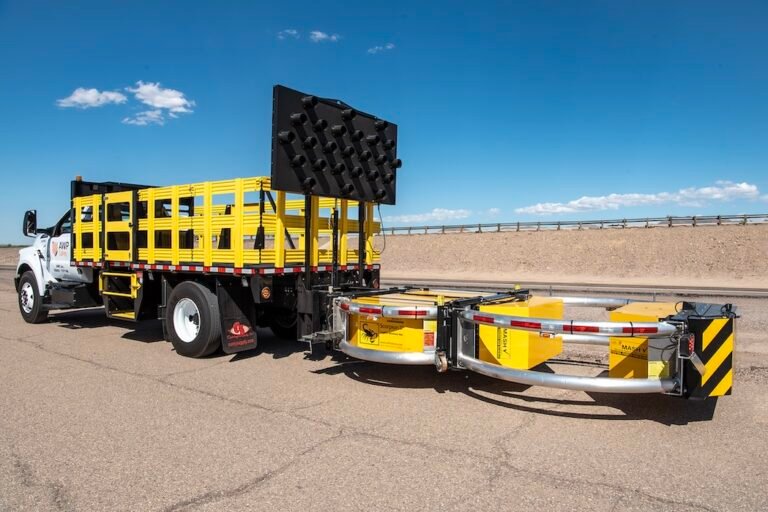
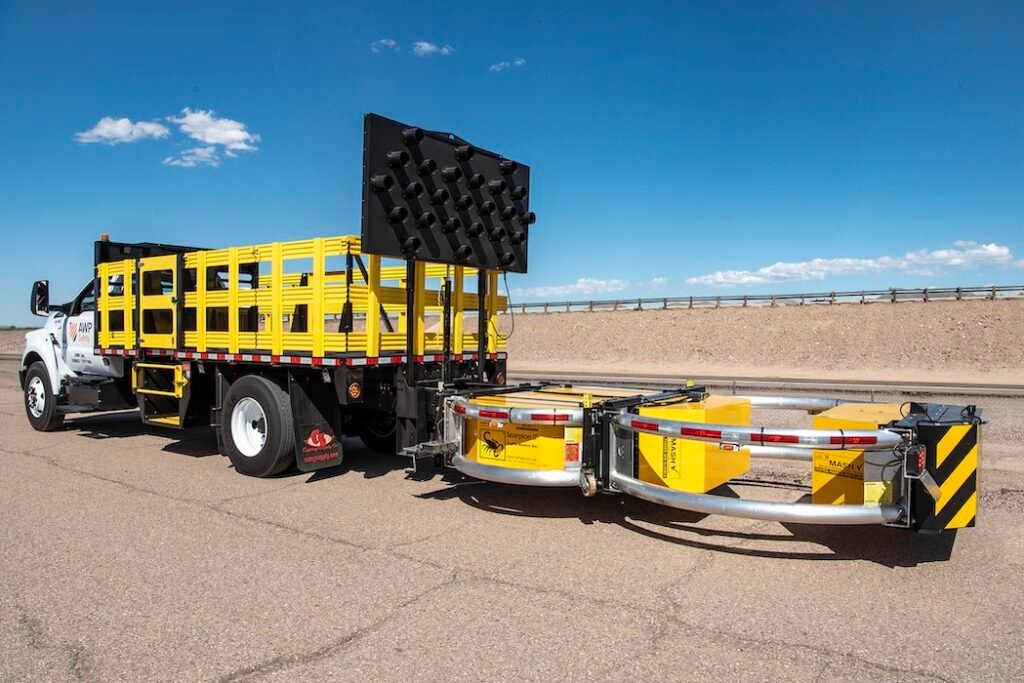
Storage planning becomes more complex when a fleet includes TMA trucks, attenuator trucks, traffic control trucks, and support units that all work together. The truck-mounted attenuator protects the crew and the site, but it also affects body layout, rear access, and payload planning. If the truck is also expected to carry signs, arrow boards, or message boards, every inch of the layout matters.
Western Highways works with buyers on truck-mounted attenuators and related vehicle packages, including Scorpion and Blade TMA solutions, as well as broader discussions around MASH/TL-3 work-zone requirements. Buyers should verify project requirements, manufacturer guidance, and agency specs before selecting a system. The right configuration depends on the truck class, the type of work, and how the vehicle will be deployed in the field.
When a TMA truck is part of the fleet, ask these questions:
- Will the unit carry signs or boards, or only attenuator-related gear?
- Does the rear setup allow safe access without interfering with the TMA?
- Is there enough space for inspection items, tools, and daily-use hardware?
- How will the truck be staged so it can leave quickly without last-minute shuffling?
Arrow boards and message boards: where they belong in the deployment plan
Arrow boards and message boards are often treated as add-ons, but they should be part of the storage and deployment plan from the beginning. These items are usually heavier, more delicate than they look, and important to the field setup sequence. If they are stored in the wrong place, they can become the last item loaded and the first item damaged.
Good planning considers:
- where the board is stored before issue
- how it is secured during transport
- who is responsible for checking power, mounts, and visibility
- whether the board moves between trucks or stays assigned to one unit
If a board is shared across multiple crews, the storage process has to be especially clear. Shared equipment works only when ownership, checkout, and return steps are obvious.
Questions to ask before choosing a rack or truck build
Use these questions when comparing rack systems, custom truck builds, or mixed storage solutions:
- What is the standard loadout for the most common job types?
- How many times per week will signs be removed and returned?
- Do we need faster access, more capacity, or better protection?
- Will one truck carry the whole package, or will equipment be split across units?
- How much manual lifting is acceptable for the crew?
- Will the design still work if the project changes or the truck gets reassigned?
- What parts need to stay available for inspection, maintenance, or emergency response?
These questions help separate a storage purchase from a workflow decision. The right answer may be a rack system, a custom truck bed, or a broader fleet layout change.
Rental, leasing, or purchase: how storage planning changes the decision
Storage needs can influence whether a buyer should rent, lease, or purchase. A short-term project may justify a rental or leased truck if the equipment mix is still evolving. A long-term municipal fleet may benefit more from a custom purchase because the storage, body layout, and sign handling can be built around recurring duties.
- Rental: Useful when the job duration is limited or the equipment need is temporary.
- Leasing: Can help when you need predictable access to a truck package without tying up capital.
- Purchase: Often better when the fleet has stable routes, recurring sign needs, and a clear storage pattern.
If your yard includes multiple trucks with different roles, the best choice may be mixed. A contractor might buy the core fleet, lease seasonal support units, and rent a specialized truck for a specific contract. Western Highways can help compare those options, especially when sign racks, attenuator trucks, and support equipment all need to work together.
Common mistakes that slow deployment
Several mistakes show up again and again in traffic control operations:
- Overloading the same truck with every possible item: This makes the truck slower to stage and harder to keep organized.
- Storing everything by size instead of use: Rarely used items can crowd out daily-use equipment.
- Using a rack that fits the gear but not the crew: If the loading path is awkward, the system will be underused.
- Ignoring the impact of boards and electronics: These items need protection and clear handling procedures.
- Buying equipment without a storage map: A new rack can create new problems if the yard and truck workflow are not aligned.
Most of these problems are fixable. The key is to study how the fleet actually leaves the yard and then design storage around that process.
How Western Highways supports fleet planning
For buyers on the West Coast or nationwide, Western Highways Traffic Safety Products can help evaluate the full picture: truck-mounted attenuators, traffic control trucks, sign storage racks, custom truck builds, message boards, arrow boards, rental and leasing options, and service support. With operations in Fresno, California and a satellite facility in Justin, Texas, the company is positioned to support practical logistics for fleets, contractors, municipalities, and agencies that need equipment staged and deployed without unnecessary delays.
If you are planning a new build or trying to improve an existing fleet, it helps to bring a few details before you call:
- truck class and body style
- current loadout and typical job types
- sign sizes, board types, and any shared equipment
- whether you need rental, lease, or purchase options
- service or repair needs for existing units
- any agency or project requirements that affect the build
That information makes it easier to compare rack systems, attenuator setups, and custom solutions that fit the way your crews actually work.
Best-fit summary
If your goal is faster pullout, fewer damaged signs, and a cleaner yard, start with the storage system that supports the daily loadout—not the other way around. For many fleets, that means pairing the right traffic sign storage racks with clear staging zones, assigning boards and accessories a defined home, and making sure each truck is configured for the real work it performs. When a fleet is built around actual deployment habits, the result is better readiness, less handling, and more predictable field performance.
Need help planning a truck or storage setup? Call Western Highways Traffic Safety Products at (559) 394-7762 and have ready your truck type, sign inventory, board needs, and whether you are comparing a rental, lease, purchase, or custom build. That information will help the team point you toward the right TMA truck, attenuator, rack, or fleet storage solution.
Helpful related resources include a look at 3s swing racks, ideas for custom truck beds for traffic control operations, and planning notes for custom traffic control trucks.
